Episode Transcript
[00:00:05] Good to see everyone out there today. Good to have you folks with us online as well. First, I want to thank all those who are brave enough to reach out and express their gratitude for last week's message and share how they could relate to the new insight that I shared about Jacob.
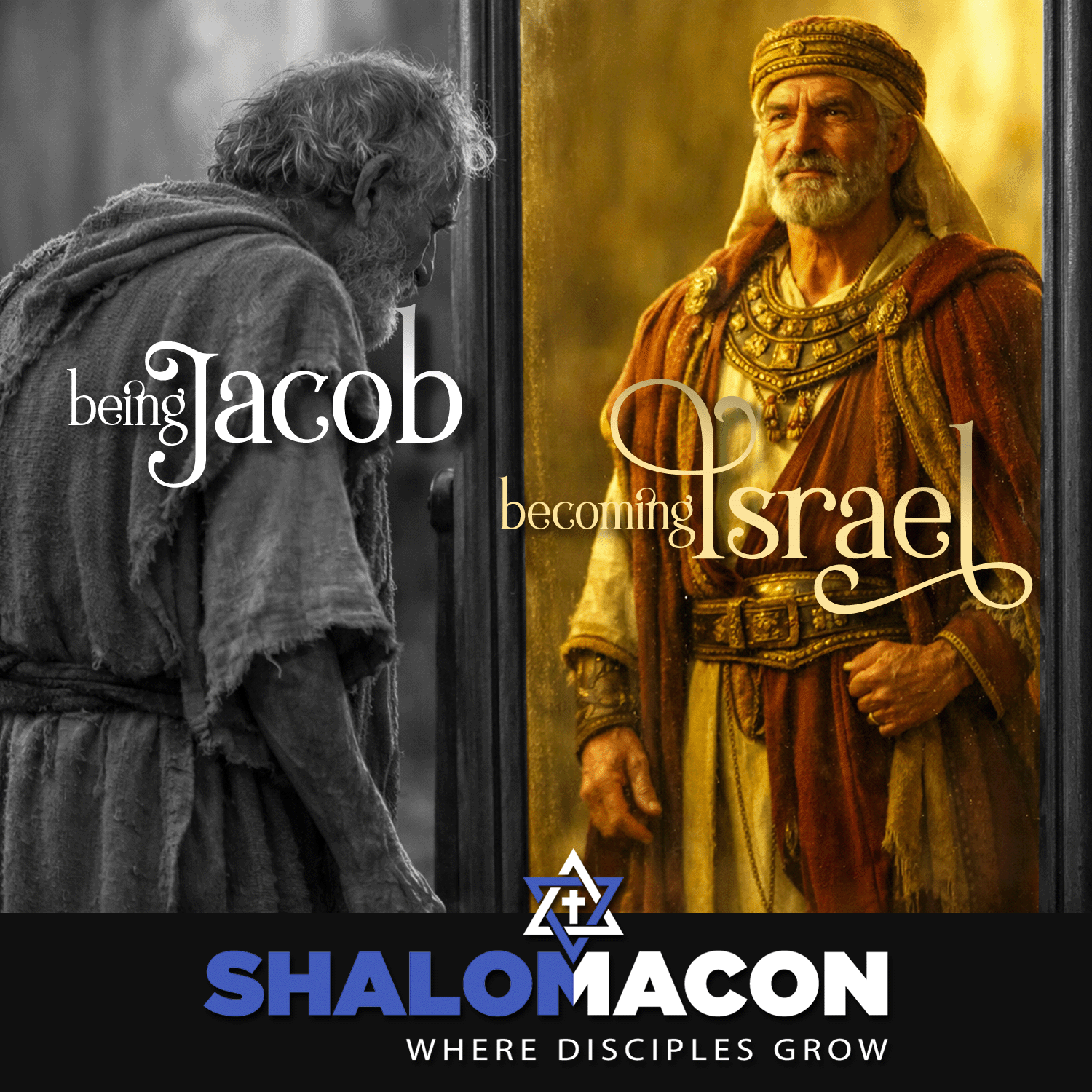
[00:00:24] Like Jacob, they'd been filtering their lives through pain, suffering, and regret, rather than through the lens, gratitude and hope. So if you haven't heard last week's message, I encourage you to go back and listen so that you can get the full context of what we're going to be talking about today. But here is a brief summary of what we talked about.
[00:00:45] Last week's message was entitled the Poison of Regret. And let me just clarify that word regret is a broader word than usually what we make it. Regret just means when you look back on bad things in your life and you look upon them negatively.
[00:01:00] And so we took a close look at Genesis 47 through 47, 7 through 10, where Pharaoh asks Jacob that surprising question. You remember the question he asked him, not simply his age, but he says, how many are the days of the years of your life? And we looked at Rabbi Hirsch's response and how he interprets this. And Jacob's response based on this interpretation was the foundation of my message last week. He said, what? Few and what's the word?
[00:01:34] Evil.
[00:01:36] Wow. Few and evil are the days of the years of my life. And in this response, we heard the voice of sorrow and regret, right from a man who had been chosen, blessed, and even renamed Israel, Prince of God.
[00:01:58] Yet he's still interpreting his life through loss and pain. So through this window into Jacob's perspective, we explored how memory doesn't merely record the past, but we talked about how it reshapes it and went into one particular, I don't know, psychological or whatever study that had shown how we don't really just replay memories like videos, we rebuild them. And each time we replay them and we rebuild them and they may be a little bit different every time. And so we alter the past through continuing to ruminate on these things.
[00:02:41] It reshapes it and how.
[00:02:44] And through this, we repeatedly return to regret. That can compress a God filled life into a story defined by hardship. And so we concluded by saying this is exactly what happened with Jacob, because even after becoming Israel, he kept returning to Jacob. Okay, you read the Scriptures and it'll flip flop. Israel, Jacob, Israel, Jacob. And you look and there's certain times and certain reasons that he is called that.
[00:03:12] And as I was studying, I didn't. I Put this in my notes. But I noticed that most of the time that he is called Israel. We'll find out why here in just a minute.
[00:03:23] There's some kind of connection to Joseph.
[00:03:26] So now, as we enter the Torah portion, the final Torah portion of the book of Genesis, vayechi, which means what?
[00:03:35] And he lived the Torah, invites us to see whether or not something finally changes at the end of Jacob's life. Whether he will be satisfied being Jacob or if he will embrace his new identity.
[00:03:49] Not so new anymore. It's been years and years and years, but his different, newer identity as Israel. So before I go any further, one thing I want to point out, make sure everybody's clear, is that I'm not putting down Jacob. This is not a me saying, you know, Jacob's bad or whatever. A lot of people, you know, when they look back and they say, oh, the children of Israel, why couldn't they just trust the Lord and everything? Well, if you were in that situation, you probably would have done exactly the same thing. So I'm not trying to find fault with him and bringing down to our own level, but when I studied the Torah portion, man, these words just jumped off the page and hit me square between the eyes.
[00:04:29] I suddenly realized something that the Scripture shows us again and again.
[00:04:35] And this is what I realized, that the stories in the Bible aren't just stories. I mean, of course I knew that, but this time it was real.
[00:04:44] It came to life.
[00:04:46] These stories are real events about real things that happen to real people.
[00:04:55] People who aren't perfect like us.
[00:05:00] Well, there's a few here.
[00:05:02] As we know, the Bible is filled with people who are flawed and have to wrestle through their personal struggles to shave off those rough edges. Right?
[00:05:15] Something like our lives as well.
[00:05:17] And they have to do this to become the people God wants them to be. Some do it quickly. Others, it takes a lifetime.
[00:05:27] Some never quite get it.
[00:05:32] Take a look at the prophet Jonah, for example. Think about that. At the very end of the book of Jonah, he's still not God, is still saying, don't you get it?
[00:05:42] And it just ends on a cliffhanger like that.
[00:05:45] And so this realization made Jacob's story real to me in a way that I'd not seen before. And guess what?
[00:05:53] I could relate. And I figured there were others who might be able to relate as well. So we're about to get into the Book of Shemote or Exodus here next week.
[00:06:02] And in it, we'll be learning about how the Egyptians enslaved the Israelites and how God miraculously delivered them through the hand of Moses.
[00:06:12] But have you ever wondered why that immediately after their deliverance from Egypt, the Israelites looked back on their slavery, their captivity, with nostalgia or maybe even fondness?
[00:06:28] Does that make any sense at all?
[00:06:31] It says, Numbers 11 says, oh, that we had meat to eat, basically. Why don't we have meat to eat? We had meat in Egypt, right? Oh, remember the fish that we had in Egypt that cost nothing?
[00:06:46] The cucumbers, the melons, the leeks, the onions, and the garlic. But now our strength is dried up, and there's nothing at all but this manna to look at.
[00:06:55] I mean, it's like they're looking at their slavery and saying, hey, man, it was steak dinners every night. We didn't have to pay for it. What's the problem here?
[00:07:04] That's a false memory. It's a memory that has been recreated in their minds. Often when we try to walk away from pain and hurt, it's uncomfortable at first.
[00:07:15] When wounds begin to heal and new flesh begins to form, it's itchy, and sometimes it gets stiff.
[00:07:23] But only a person who is trapped in the mentality of slavery would ever trade that freedom for slavery.
[00:07:32] There's a term for this in psychology. Many of you probably heard it.
[00:07:36] It's called Stockhold syndrome.
[00:07:39] Okay?
[00:07:40] When someone lives under captivity long enough, they can begin to bond with the very thing that harms them.
[00:07:49] The pain becomes familiar, and freedom starts to feel dangerous.
[00:07:54] If we're not careful, we can do the same thing spiritually.
[00:07:59] We can be holding on to identities formed in bondage while rejecting the freedom that Hashem wants us to have and live in and has already given to us. Now, the Stockhold syndrome, that's an extreme example, but it gives us a glimpse into the mind of those who can't give up their pain and choose a life of joy, happiness, and contentment. Okay?
[00:08:25] The Israelites remembered Egypt fondly, not because it was good, but because it was familiar.
[00:08:31] It was something they knew.
[00:08:34] Slavery felt predictable.
[00:08:36] Freedom was uncertain. They didn't know what to expect.
[00:08:40] And actually, this is something the sages talk about when the manna stopped and they were forced to go into the promised land is that God had supplied all their needs up to that point. And this is why the spies actually came back with the evil report. It's basically, we can't do this on our own.
[00:09:00] We've had all our needs met and been supplied. We're gonna have to go into this land, and we're gonna actually have to do something. And part of that is Fight these giants. And we can't do that. Okay, so it's that paradigm that's harming ourselves without us even knowing. And then pain with certainty felt safer than hope, accompanied by risk.
[00:09:24] So Jacob told Pharaoh, he said, few and evil are the days of the years of my life. That's what we talked about last week. And if we're honest in this situation, once we learn what it means and how to understand it, Jacob's words, they sound familiar. They feel more familiar to us. And as I said last week, many of us could summarize our own lives not by remembering how God carried us, but by replaying words where we were hurt. As I was preparing this, I thought about the illustration, the inspirational print or picture. You get it framed and all that kind of stuff. You see it on different Bibles and stuff like that. Footprints in the sand. You guys remember that. And there's two sets of footprints and one set of footprints. And it's like, God, why'd you leave me?
[00:10:11] That's our first instinct. But he said, that's not where I left you. That's where I carried you. You know? But we interpret it wrong. We don't remember how it really was.
[00:10:25] We don't deny that God was present. We just struggle to let the presence, let that presence outweigh our pain. And so, like Jacob, we've survived.
[00:10:39] We've survived a lot. A lot of us in this room have survived things that other people would not understand or not believe.
[00:10:47] And survival can quietly become our identity. So the question before us this morning, it isn't really about Jacob at all. It's about us. So when we tell the story of our lives, are we still speaking like Jacob, shaped by what happened to us, holding on to that pain? Or are we ready to step into Israel, shaped by who God says that we are and go where he's leading us. So last week, I mentioned my personal story, assuming that you guys have heard it before, because I've shared it before. But let me just go ahead and share it again so I can give you the full scoop and you can understand where I'm coming from.
[00:11:27] So for several years, I knew that God had called me. I knew that God had commissioned me. I knew that God had a plan. I. I knew that God was sovereignly in control of everything.
[00:11:45] But yet I was unhappy.
[00:11:47] And until I fixed that, I could not move forward and he could not use me in the capacity that he wanted to.
[00:11:58] Like I said, I knew he was all powerful, omnipotent, that he was sovereign, that he had complete control of over everything that happened in the entire universe. And that's what really ticked me off.
[00:12:12] You've seen Fiddler on the Roof.
[00:12:14] We're the chosen people. Why don't you choose somebody else for a change?
[00:12:19] Right?
[00:12:21] And I knew he wanted to use me. I just thought he didn't like me.
[00:12:30] Is this what Jacob thought as well?
[00:12:34] Let's take a look at our Torah portion and see what we can learn from Jacob this week.
[00:12:39] Our Torah portion is called what?
[00:12:42] Vayechi, which means and he lived. Now here's the deal.
[00:12:50] I don't expect you to say everything. I believe everything that I say is the exact interpretation of how Scripture is. That's not the way scripture works. Scripture, there's 70 interpretations to every passage, every scripture, the sages say. And so scripture is not a textbook black and white. It is a life manual. And we pull from it everything that we can to learn how to live this life and live it in a way that pleases the Father. And so a lot of things that I'm going to be saying are speculation. They are based on some of the sages teachings, based on my insights, based on. But just know that this is something that's very personal.
[00:13:31] And if it works for you, it does. If it doesn't, don't worry about it. Okay.
[00:13:36] But vayikhi is the name of this week's Torah portion, which means and he lived.
[00:13:43] Anybody remember who it's referring to?
[00:13:48] Don't be shy. You'll be wrong. Go ahead, Jacob. Good. Very good.
[00:13:55] So I don't think the name of our Torah portion is coincidental.
[00:14:00] I think it's telling us something.
[00:14:03] Something very, very important. And after an entire life marked of striving and regret, the Torah waits until Jacob's finally 17 years in his life in Egypt to tell us something important.
[00:14:20] Okay.
[00:14:23] Does it say he finally lived because everything started going well for him and everything was hunky dory? No, I don't think so. I think it was because of something else. I think for the first time, Jacob started to push down all of the pain, all of the just the trauma that he had held onto. All of the whole mentality of life has just done me wrong because of something very specific.
[00:14:54] Somehow he had encountered someone who knew how to navigate grief, betrayal and suffering without allowing it to define him. And who was that?
[00:15:11] It was his son, Joseph.
[00:15:15] In Joseph, he had a living example of how to truly live.
[00:15:20] Jacob doesn't simply get his son back. He gets to live alongside someone who knows how to suffer without Being defined by that.
[00:15:32] So what did he learn from Joseph?
[00:15:34] Here are three things that I think he learned from Joseph.
[00:15:38] Joseph was able to express himself emotionally, feel deeply, be hurt, just cut to the core.
[00:15:47] But he lives without any connection to that. He lives in his freedom.
[00:15:54] He's not bound by that.
[00:15:56] Joseph is emotionally mature. He knows how to navigate the pains of life. He hurts, he weeps, but he forgives and acts without bitterness or resentment.
[00:16:07] He refuses to let his wounds dictate his actions.
[00:16:12] Number two, Joseph looks forward and not backwards. We've been talking about Jacob looking backwards. Joseph is always looking forward to the capacity or degree that he even names his sons with optimism.
[00:16:29] He names the first one, or actually the second one. Ephraim means fruitful. I'm fruitful, fruitful in this land that I've been banished to, basically, rather than reliving past trauma or pain.
[00:16:46] And actually, he may have learned this lesson from his father and recalled it later on in life. Because what happened when Rachel died, when her second son was born, what did she name him?
[00:17:03] Ben Oni, son of my suffering.
[00:17:07] Jacob said, no, we're not gonna do that.
[00:17:10] Even though she died. He says, I'm naming him Ben Yamin, which means son of the right hand, okay?
[00:17:18] Son of strength.
[00:17:20] And so he renames him. And so maybe Joseph had a recollection of that and said, you know what?
[00:17:27] That's something my father did, right? And I want to do the same.
[00:17:31] Not that Jacob did everything wrong, but just something that he held onto. And number three, Jacob. Joseph, excuse me, sees his past through purpose, not pain.
[00:17:43] And when we see our past through purpose instead of pain, just the pain, it makes a huge difference. Joseph understands that suffering has purpose. He says, God has sent me ahead of you, right?
[00:17:55] Rather than regretting his past or seeing himself as a victim harboring bitterness towards his brothers, he sees God working behind the scenes. He had every right to harbor bitterness and resentment, but he didn't.
[00:18:11] So let's go back to his sons. He named the first one Manasseh, which means making to forget, saying, God has made me forget all. All the toil in my father's house. Basically, all this strife and all this stuff with my brothers, it's gone. He gives his first child a name that signifies God's deliverance from past suffering and hardship. He names his second son fruitful or doubly fruitful. It depends on how you look at it. Because, quote, God has made me fruitful in the land of my affliction.
[00:18:46] He gives his second child the name Ephraim to represent God's blessing and success in a place that he's estranged from his family.
[00:18:56] So Joseph had plenty to teach his father.
[00:19:02] So I'm going to take an aside here, relate it here.
[00:19:07] Back when we lived in Arkansas, this is over 10 years ago, for about eight years straight, we had a men's meeting, men's fellowship, men's not prayer breakfast, but breakfast that we would meet at Panera Bread every Tuesday morning at 6am and all of us men would hang out. We would read a book together or pray for one another or talk, catch up and find out what's going on in each other's lives. And all that kind of stuff started as a study, just a conversation really, between me and a guy that I know is watching right now, Mr. Eric Lemon. And. And it grew and grew. And we had, I don't know, a dozen or so men there every week.
[00:19:50] And then we started bringing our boys. I started bringing my boys. My boys are pretty young at the time. And so as they got to a certain age, I can't remember if it was like 10, 12. Anyway, I started bringing them that. And that was an exciting day when they came. And they got to enjoy, of course, hanging out with the men. And also some really, you know, they could choose food that they normally didn't get and these sweet stuffs and everything. And so. And I got a text from my son Boaz yesterday. He said, I'm currently at Panera.
[00:20:25] He was up in the Griffin where he works.
[00:20:27] It was about 6:30am okay. And he says the smell of it brings back so many amazing memories with you. Made me emotional just walking in. I won the father lottery, and so it just melted my heart. And I thought about Jacob and Joseph.
[00:20:48] And how we can learn from our children.
[00:20:51] We don't always have to be the ones teaching, you know, Memories are strange things.
[00:21:03] Memories are built on events, but they're interpreted by our perspective.
[00:21:11] We can have the same memory, you and I, but if I interpret it different, yours can be pain, and mine can be joy or gratitude or vice versa.
[00:21:26] The same exact experience.
[00:21:30] And sometimes small and seemingly insignificant actions, like taking a kid to breakfast can make a bigger impression on people than we realize.
[00:21:41] And quality time with those that we love can never be overestimated. Those are some things that I learned from that.
[00:21:49] And as I said, sometimes we can learn from our children. But you know what? Sometimes we need to learn from our children.
[00:21:55] Many times as parents, we feel like a failure that things didn't turn out the way we wanted for our Kids or the way we imagined. You know, our kid didn't become a doctor like we wanted her marry the person we wanted, or they didn't follow the path that we wanted for them.
[00:22:11] But guess what? Hashem can still teach us through them, just like I imagine Joseph teaching Jacob.
[00:22:22] And if we, if we can learn to let go of the bitterness, regret, pain, sorrow and loss that we have held onto for so long, then we'll learn, whether it's through our children, through another, through the Word whatever, to live a happy and fulfilled life. So let's return to the Torah portion.
[00:22:45] As we wrap up the book of Genesis, we see Jacob again. He's older, he's weaker, he's not in good health. He's nearing the end of his life. And so something remarkable happens.
[00:23:01] Instead of rehashing his regret, Jacob, even on his deathbed, he lifts his eyes and he blesses his sons.
[00:23:11] He pushes through the pain to talk about the future, their future specifically, and recall the promises as God has made to him rather than nursing old wounds. In other words, Jacob finally begins to live as Israel.
[00:23:30] But just before he begins to bless his children, we see the defining moment where everything changes.
[00:23:38] This is in Genesis 49, verses 1 and 2. It says, Then Jacob called his sons and said, gather yourselves together, that I may tell you what shall happen to you in the days to come. Assemble and listen, O sons of Jacob. Listen to your father Israel.
[00:24:00] Listen to your father Israel. You know, this is the first and only time that he calls himself by that name in scripture.
[00:24:11] And when he.
[00:24:15] Sorry, I just thought about something.
[00:24:17] And when he does, he blesses his children.
[00:24:21] I lost my grandfather a couple years ago, and you know, they live 12 hours away.
[00:24:31] And we had, we had some strain in our relationship early on in this walk.
[00:24:38] They didn't understand us going, you know, this messianic Jew thing. And of course we were trying to assert ourselves and make ourselves, you know, known and, and we're right and all that kind of stuff. And, and then we finally just said, I finally said, hey, we've got to stop this. We have to display love.
[00:24:59] It doesn't matter who's right.
[00:25:01] That's the only thing that matters is love.
[00:25:04] And so from that point point forward, we just started loving and serving our family, specifically our grandparents, my grandparents and 180 degree change.
[00:25:19] And my grandfather's health was failing.
[00:25:26] We got to Arkansas and went to see him and he had basically gone to bed with hospice. And last 24 hours, he hadn't said anything, hadn't done hardly anything.
[00:25:48] And we get there. I get there and I go to his bedside and I tell him I'm here and praying for him and I love him.
[00:25:59] He sits up and he prays blessings over me and my family.
[00:26:07] And then he lays back down and he doesn't speak again.
[00:26:11] And he passes about 24 hours later.
[00:26:15] So that's amazing.
[00:26:17] This reminds me of Jacob blessing his sons.
[00:26:21] But at this moment, Jacob finally accepts his identity and his responsibility as Israel, as the Prince of God. That's a heavy title, right? Prince of God. Hi, I'm Prince of God.
[00:26:36] You know, who wants to. Wants to wear that around, but it's his calling.
[00:26:47] Jacob finally accepts this identity.
[00:26:50] And this is, like I said, the first and only time he calls himself by that name.
[00:26:58] So I wonder how many of us are living the same way. Some of us haven't fully accepted the new identity that we have in the Lord. Some of us continue holding on to this identity of heel, grabber, disappointment, failure, klutz, dummy, the one who's never good enough, the loser, the wannabe, whatever the label is, right?
[00:27:27] And we don't take a hold of the name, the identity, the purpose that God has had for us all along.
[00:27:36] We've learned how to survive as Jacob, but we've never quite learned to live as Israel. The tragedy isn't that God never had a plan for us.
[00:27:46] It's not that he didn't bless us.
[00:27:49] It's not that he didn't call us up and give us a new identity. It's that we never took ownership of that identity that he wanted to bestow on us.
[00:28:00] And so we can't live our fullest lives with while we're allowing regret to narrate our identity.
[00:28:08] But guess what? We put the past in God's hands. It's a game changer.
[00:28:15] We may be redeemed, but are we living as if we're redeemed?
[00:28:23] Toward the end of our Torah portion, we read how Jacob live. Jacob's life ends.
[00:28:28] This is in chapter 43, verses 33. And this is the last verse of that chapter. And then the next few verses of the very last chapter of Genesis.
[00:28:39] When Jacob finished commanding his sons, he drew up his feet into the bed and breathed his last and was gathered to his people.
[00:28:48] Then Joseph fell on his father's face and wept over him and kissed him.
[00:28:53] And then Joseph commanded his servants, the physicians, to embalm his father.
[00:28:59] So the physicians embalmed Israel.
[00:29:05] That's what we have at the very end. They didn't embalm Jacob. They bombed Israel, the one that he had become.
[00:29:21] Jacob didn't take a hold of that identity of God that God had given him until the day of his death, unfortunately. And there are a lot of ways that we want to be like Jacob, of course, but not in this one.
[00:29:34] Don't wait until the end of your days to accept what God has called you to be and accomplish the things that he's called you to do.
[00:29:43] By that time, you've missed the opportunities and you've passed by all these experiences that God's goodness would have allowed you to have.
[00:29:53] And you'll never know what could have been.
[00:29:56] Sure, Jacob is one of the patriarchs, the man through which the nation of Israel is birthed. But.
[00:30:05] There was a lot of things he could have done, even more that he could accomplish.
[00:30:10] He did amazing. God did amazing things through his life. But what would it have looked like if he would have come away from that wrestling match, embracing that new identity, coming away from it with more than just a limp?
[00:30:28] And what if we would do the same?
[00:30:30] So how do we resolve this problem?
[00:30:33] Well, the biggest way is, first of all, we have to change. The primary way, I should say, is we have to change our perspective.
[00:30:40] And I've put together three ways that I see us doing that.
[00:30:46] But let me just say this perspective is a weird thing. Have you seen those images where it looks like an animal or a face or whatever, and then the camera rotates out and it's just stuff hanging? It's like pieces of things or even, you know, bicycle parts or, I don't know, stuff like that. And it's just hanging. And because of your perspective aligning with it now, you see a completely different picture. Right?
[00:31:16] So this is what we have to do. We have to change that perspective so we can see something totally different, see our lives through a different filter.
[00:31:25] The first step is to stop watching reruns and turn off the tv.
[00:31:30] Not literally. Okay, so what do I mean by this?
[00:31:33] We have to stop replaying the hurts, the pains, the trauma of the past. We have to simply turn it off.
[00:31:40] When those thoughts start replaying, we have to just know.
[00:31:45] And sometimes this means saying it aloud, writing it on a note card, and taping it to the mirror.
[00:31:52] Whatever it takes, Right, to disrupt this hostile takeover that's happening in our brains. Yeshua once said, no one who puts his hand to the plow and looks back is fit for the Kingdom of God. We are trying to work for the Kingdom, yet our past is dragging us backwards.
[00:32:09] Right.
[00:32:12] It's not because the past doesn't matter, but it's because the future is more important.
[00:32:19] I don't know if you guys know about this, but the Lubavature Rebbe, Rabbi Menachem Mendel Schneerson of Blessed Memory, Chabad, as an organization, as a sect of Judaism, a denomination of Judaism, is one of the few that do not place an emphasis on the Holocaust.
[00:32:40] They don't establish Holocaust, you know, things and have events and all that kind of stuff. They focus on investing into the future, investing into the youth, investing into, you know, all that kind of stuff. Because that was his philosophy. When we look at the past and dwell on the past and the hurt and the pain, we'll never be able to accomplish what we have to do now and become all that we can be. The apostle Paul echoes the same wisdom when he says, forgetting what lies behind, straining forward to do what lies ahead, I press on toward the goal. This is Philippians 3.
[00:33:17] Notice that Paul doesn't deny his past how he once persecuted the very people he was now leading, but he simply refuses to let it define his future.
[00:33:28] Okay, number two, we need accountability.
[00:33:31] We need someone who we can trust to help us see when we're starting to veer off the road. So someone who can lovingly remind us to look forward rather than backwards. Someone who knows us well enough to recount the blessings that God has poured out on us and help us reorient and recalibrate our course. The author of Hebrews, whoever that might be, tells us, take care, brothers and sisters, lest there be in any of you an evil, unbelieving heart. But exhort one another every day that none of you may be hardened by the deceitfulness of sin. That's really, you know, the biggest tool that Hasatan has, Just about his only tool is deception.
[00:34:18] He has a loud roar, but no fangs.
[00:34:22] Okay. And his. His tool is deception. And number three, practice gratitude. Not only do we need to stop the feedback loop and get support from outside, from outside of ourselves, but we also need to create new patterns of behavior and thinking to practice Musar, if you will. Have you guys practice Musar? Yes. No.
[00:34:47] Wow. Let's practice some Musar.
[00:34:49] Okay. Rabbi Damien has suggested this gratitude journal previously, and it's a perfect place to start through daily journaling about something we are thankful for. Our minds are redirected from the devil's labyrinth, and this is the only time I'm not using it in reference to Ike.
[00:35:09] So we redirect our minds from the labyrinth of self pity and self destruction and create new mental pathways and new patterns of thinking that slowly begin to reshape our self identity.
[00:35:28] Many of you guys are familiar with this text. Benzoma says, who is rich?
[00:35:33] Anybody know the answer?
[00:35:35] One who is happy with his lot.
[00:35:39] He said if you eat the toil of your hands you are fortunate and it is good for you. Fortunate in this world and good in the world to come.
[00:35:50] So there are many people listening to this right now, maybe some of you watching online or listening to the podcast after the first fact who feel this same way.
[00:36:02] Hashem wants to use you, but as of this moment you don't fully trust him. You've been hurt, you have scars, you have wounds that still need healing. But today I want you to hear this message, all of you.
[00:36:18] God loves you and he is faithful to take you where he promised.
[00:36:26] But growth is often painful and comes at a cost.
[00:36:30] And what are you willing to give up so that he can do his work in you?
[00:36:37] Are you willing to give up those grudges, those hurts, those betrayals, those words spoken behind your back?
[00:36:46] Whatever it is that's keeping you from embracing your identity that God sees in you, it needs to be jettisoned.
[00:36:57] Let them all go and get a fresh start.
[00:37:00] We're already well into the Biblical New Year and we've just passed into this week, the Gregorian New Year. Happy New Year to everyone by the way.
[00:37:11] So don't let another year go by stuck in the old ways of thinking, holding onto hurts, pain and regret being. Don't even let another week go by.
[00:37:21] Make a decision today to leave your wounds at the feet of the Master and begin living out the version of you that you've always wanted to be. The version of you that Hashem sees in you.
[00:37:42] I love you all and you know that and wish you the very best in 2026.
[00:37:51] Shabbat Shalom I'm Darren with Shalom Macon. If you enjoyed this teaching, I want to ask you to take the next step. Start by making sure you're subscribed to our channel. Next, make sure you hit the like button on this video so that others know it's worth their time to watch.
[00:38:06] Last, head over to our website to learn more about Shalom Macon, explore other teachings and events, and if you're so inclined, contribute to the work that we're doing to further the kingdom. Thanks for watching and connecting with Shalom Macon.