Episode Transcript
[00:00:00] Speaker A: The New Testament, including Yeshua's own words, makes one very clear point about the death of Jesus.
The death is a participatory phenomenon.
Remember this.
It is something that all are called to share. Experientially, the logic is not Jesus died so we don't have to.
Rather it is Jesus died so that we together can follow in his steps and die with him and like him, having full fellowship with his suffering, so that we might share in the likeness of his resurrection.
While Jesus did die for us, that does not mean that Jesus died instead of us.
It means that he died ahead of us and with us.
Substitutionary frameworks, whether intentionally or not, corrode the logic of discipleship among everyday disciples.
We spent two weeks building a framework around the word chain merited favor. We talked about the tzaddik, the pattern of the righteous one who stands with his people before God, the one whose demonstrated faithfulness becomes their standing. We saw Moses at the golden calf. We saw that Noah himself had found favor, Joseph and the people of Egypt, and certainly Yeshua as the ultimate fulfillment of the pattern, the one whose pistis his faithfulness has proven chain before the Father and covers all those who are bound to him.
And I ended last week by telling you that we were going to head toward a challenge, maybe very challenging, in challenging one of the most central assumptions in Christian theology. And I told you that that was coming and it's Passover week. So here we are.
But by way of just jumping into it, I'm not going to start with any of my positions or arguments, I'm going to start with theirs because I want you to hear clearly, and it won't come as a surprise, but what much of Christian mainstream Christian teaching teaches about this particular area so you understand what's exactly at stake when we start into this discussion.
Here is a quote from a major Christian missions organization, EastWest.org, which explains how Jesus fulfills the Passover lamb.
It says, each of these passages not only point to Jesus as the Passover lamb, they give a list, obviously, who takes away the sin of the world, but also to his work as our substitute. He died in our place.
He had no sin of his own. Yet Jesus paid for our sin. The Father stacked the collected sins of mankind on the shoulders of his Son, turned away from him, and punished him to death for our sins.
That is the essence of the Christian faith, namely substitution.
If you don't understand substitution, the quote ends, you do not understand Christianity.
And here's gotquestions.org as I've quoted many times. One of the largest Christian reference sites in the world. Another important sacrifice involving lambs was the daily sacrifice at the temple in Jerusalem.
Every morning and evening, a lamb was sacrificed in the temple for the sins of the people.
Now hold on to that statement.
The Passover lamb here and the daily temple sacrifices are blended together. They're both lambs, they both involve death, so they must be doing the same thing, right? The logic seems very, very obvious. The lamb dies.
The lamb is a substitute. Jesus is the lamb. Jesus is the substitute done.
It's not a belief that is just built on one verse.
It's built on a network of texts and also assumptions.
John the Immerser looks at Yeshua and he says, behold the Lamb of God who takes away the sin of the world.
Paul writes in Romans that God displayed Yeshua publicly as a propitiation in blood.
Isaiah 53 says the Lord was pleased to crush the servant, rendering him as a guilt offering. And the Passover lamb sits right at the center of it, especially this week, tying the whole picture together.
Jesus was sacrificed on the cross by God to appease his wrath. That was intended for us.
We are not going to address all those texts today. We will get to many of them. This series has some weeks ahead and I promise you we're going to look at propitiation and Isaiah 53 and what Lamb of God actually means in context. None of those things will be left unstated. But I want to name this very, very openly. Clearly what we're dealing with, because it has a name and I mentioned it last week. The theological framework behind all of it is called penal substitutionary atonement. Too long to say for the rest of the series. Psa not your prostate. Penal substitutionary atonement. Psa.
It's the idea that humanity deserved God's punishment, that God's justice required that punishment be carried out, and that Jesus stepped in as our substitute, taking the penalty on himself so that we would not have to bear it. God was angry. Jesus absorbed the anger. We go free. Psa Remember the quote, the essence. This is the essence of Christian faith, namely, substitution. If you do not understand substitution, you do not understand Christianity.
And I realize that for most of us, whether we are from a Christian background or even in a Messianic one, because truthfully, much theology in Messianic Judaism has been inherited from the Church. As it comes to Jesus and the New Testament, this framework feels untouchable, a bedrock.
It feels like the thing that supports everything. The word sacrifice itself is synonymous with this formula. Something Died, that something else may live.
Substitutionary death. God required blood. Bulls and goats weren't enough.
So Jesus.
Most believers hear the word sacrifice. They think of one category of thing and that category is a death payment.
But this understanding when it comes to sacrifice, atonement, forgiveness, the power of blood, the work of Jesus and the specific power of his blood and even the nature of God as the disciples understood it through the system, is not correct.
Not entirely. Not entirely. And in some very important ways, not at all.
I know those are strong words, but I will state clearly through what I'm teaching you in this series. This is more than just a Jewish perspective.
This is a biblical perspective.
This is the Bible supporting the things I will bring forward. And many, many respected non Jewish biblical scholars have proven to be an incredible source of study. There is a book that has become a real doorway, a controversial book, I might add, by an authority, Andrew Rilera, that's called the Lamb of the Free.
His work on sacrifice atonement. Alongside the scholars like Rabbi Jacob Milgram, Matthew Thiessen, William Gilders, Douglas Campbell, Christian Eberhard, these are all highly respected biblical scholars.
But it confirmed for me so many deep suspicions and troubles that I have.
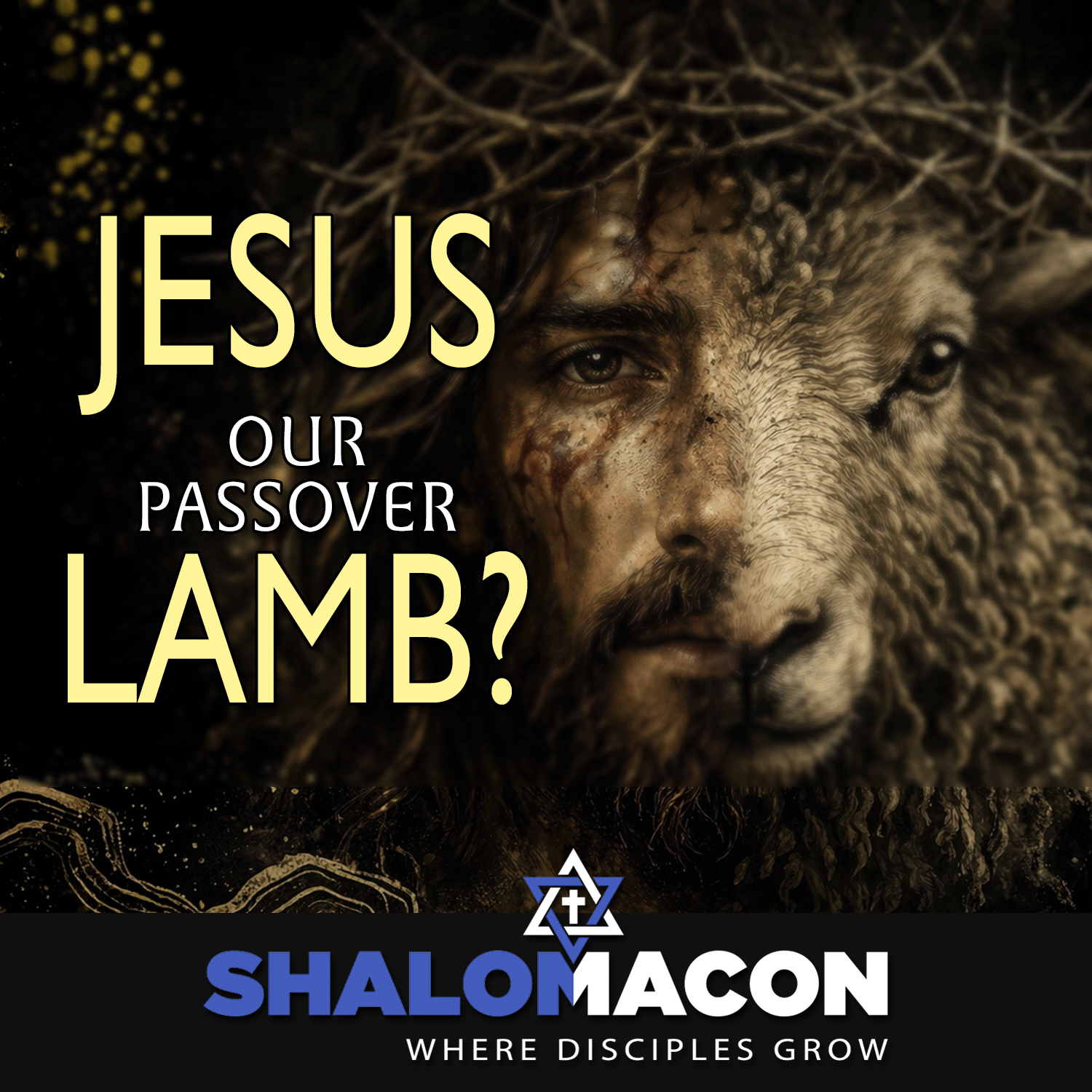
I'm deeply indebted to that work. I'll be drawing on it as we go ahead. But today, because we are sitting in Passover week, I want to start with what I've made clear. The image that is very obvious now, the Passover lamb. And for many Christians, Nick Tenney told me just before service, he said Passover, Passover was my entry point in.
Dave told me his church that he used to go to just celebrated a Passover Seder using Moishe Rosen's Christ in the Passover, the Passover lamb. This is an entry point. This is an image for many Christians that makes the whole thing feel self evident. That of course, Jesus, Jesus is the Passover lamb.
The lamb died so Israel could live. Jesus died so we can live.
What's the confusion?
But if that image, if that's the one that you reach for first, the one that it has the instinctual pull, if that turns out to be doing something different than it is assumed to do, then we have to ask questions about how we read or other texts related to this particular issue.
Big issue. So let's open Exodus 12 and what it actually says, the instruction God gives for the first Passover. They're pretty detailed, pretty specific, and pretty different than what is often assumed. Each household select a lamb on the 10th of the month. They're to keep it until the 14th day. Then they're to slaughter it at twilight. They're to take the blood, put it on the two doorposts and the lintel of the house where they will eat it. They will roast the lamb, and they will eat it, all of it, with unleavened bread and bitter herbs.
They eat in haste, sandals on feet, staff in hand, ready to move.
And then God says, why?
Exodus 12:12. I will pass through the land of Egypt that night I will strike all the firstborn in the land of Egypt. The blood shall be a sign for you on the houses where you are. And when I see the blood, I will be pass over you. And no plague shall fall upon you to destroy you. This is where we get the name Passover. Pesach.
It means more than just Passover in its root form. It also means protection. That's something else. We'll get there. Maybe.
Look at what is present in the text and look at what is absent in the text.
Because there's a gap between what most people assume here and. It's a pretty big gap. What is present is a family meal at its core. A family meal. A lamb that is eaten, blood on the doorpost, haste, unleavened bread, bitter herbs, protection, deliverance. A memorial for future generations. What is completely absent. There is no altar, there is no priest. There is no confession of sin. There is no laying on of hands, no sprinkling of blood on an altar, no burning of fat on a fire for God. No language of sin, no language of atonement, no language of forgiveness, no language of punishment, no language of substitution or of a wrath being satisfied.
None of it.
Not a singular word.
Along that thematic approach, when the Torah describes actual sacrifices, you will see a very different and specific set of actions. The offerer brings the animal to the tabernacle, lays hands, does the slaughter.
A priest is involved, majorly involved.
The blood is collected. It's applied to the altar in specific ways, whether it's smeared, sprinkled, daubed, depending on the type of offering. Where does the blood go? The fat is burned. There's a protocol, there's a system, there's a location, there's a mediator.
Passover has none of those elements.
There is no tabernacle, there is no priest, there's no altar. The blood doesn't go to an altar. It goes on a doorframe. It's not applied by a priest, it's applied by a father, the head of a household. The lamb is not offered to God. It's eaten by the family. This is a meal.
And what is the blood? What is the blood?
The blood on the doorpost is not paying for anything.
It's not settling a debt. It's not absorbing punishment.
The text says it's a sign, an oat.
It's a sign. When I see the blood, I will pass over you. The function is, as I said, protective.
Scholars use the word apotropaic.
It means turning away, destruction.
It's apotropaic. The blood on the doorframe is a. It's a word.
It marks the household as belonging to the God of Israel. It distinguishes Israel from Egypt. It does not transfer sin, it does not absorb wrath. It identifies and protects. And you think about what God is doing in this chapter. He's executing judgment on Egypt and Egypt's gods. That's explicitly what is said in Exodus 12. Against all the gods of Egypt, I will execute judgments. This is the final act in this cosmic like confrontation he's been having with the plagues in Israel, I mean, in Egypt, between the God of Israel and their false powers. The blood marks who belongs to whom. It is identity, it is allegiance, it is protection.
And when we see in the sacrificial system, the blood in scripture, in the sacrificial system is never serving as evidence of death.
The blood represents life, life, life. Leviticus 17:11, which we have much to say on the life of the flesh is in the blood. The blood on the doorpost is a sign of life, not a price.
I'm quoting Gilders this book. I'm sure you'll want to run out and pick it up right after Havdala. Blood ritual in the Hebrew Bible, the blood has an effect not on the destroyer, but on God who controls the destroyer. There is little evidence, he says, for the magic of sympathetic substitution.
The text never indicates that the blood substitutes for the blood of those in the house.
But the lamb died instead of the firstborn.
The argument comes, and that's a serious pushback that feels very logical and intuitive. The argument goes like this, that without the blood on the doorframe, the firstborn dies. With the blood, the firstborn lives. Therefore the lamb died instead of the firstborn. That's called substitution, Rabbi.
But if we look more carefully, we have to figure and see that if we keep reading the rest of the Torah, that logic just is broken apart.
The text says that the failure to observe Passover properly would result not only in the death of the firstborn male, but also the death of all the firstborn livestock.
So the lamb, this precious lamb, that's supposed to be substituting for these human firstborns. It does the same work for bulls and goats and donkeys. The lamb itself isn't even a firstborn anything.
It doesn't have to be.
It's a one year old lamb without blemish.
So we would be saying that a non firstborn lamb is serving as a substitutionary for firstborn for also humans, cows, goats, donkeys, all at once.
That's a strained category to begin with.
But here's the more important thing. The Passover instructions, they do not consist only of slaughtering a lamb and applying blood. There are a whole lot of other things. We just had a Passover seder. What are some of the other elements of the, of the commandments regarding Passover? What are you supposed to eat?
Matzah. What else are you supposed to eat?
You're supposed to have bitter herbs. You're not supposed to have any leaven in your house. You're supposed to eat the lamb. If you don't eat it all, you have to burn it, eat it with unleavened bread, eat it in haste, burn the leftovers, don't break a bone of it. Failure to observe any of those other results, those things results in being cut off.
If the argument is simply that whatever participates in deliverance must therefore be participatory, then the matzah is also some kind of substitution, participatory thing. That's a broad category. Passover is much more than slaughter. It's this whole pattern, this whole catalog of covenant obedience that you have to do. Bitter herbs are not substitutes for anyone.
And matzah doesn't die instead of the firstborn.
It means that the lamb belongs to a larger ritual, if you will, of participation.
Now also, also, and this I'll just throw in there because it's just a little thing, but if the lamb substituted for the firstborn, then they should be considered completely redeemed at this point in time. God has saved them, redeemed them. Is this the redemption of the firstborn?
No, it's not. That happens way later in the book of Numbers. And there's a whole other process for how the firstborn are actually redeemed.
The lamb didn't settle the account.
The firstborn still belongs to God. It still must be redeemed. Okay, But didn't Passover become a sacrifice? I mean, I read that language in there. Yes, it most certainly did. And this gets a little bit confusing, but you have to understand, once the tabernacle was built, once it was established, the Passover lamb was brought into the sacrificial system.
By the time of the second temple, the lambs were slaughtered in the temple courts. There were priests, there was an altar, and it looked as, and functioned as a sacrifice. But when the Passover became a temple sacrifice, when it became a part of the temple ritual, it became known as a Zevach Shelamim.
Now what is a Zevach shalamim?
It is not a sin offering.
It is a thanksgiving offering, the root shalom, peace offering. It's a peace. There are a number of these kinds of that fall under this category, say peace offering, a well being offering, a communion offering and a fellowship meal.
Not a sin offering, not a guilt offering, not an atoning sacrifice. And we're gonna actually spend more time on the different categories of sacrifice and what they actually do. But now the critical thing is to see the category of the Passover.
Even when it becomes a temple sacrifice, it was never placed in the category of offerings that deal with sin.
The shel amim is the offering you bring when you want to eat a meal in God's presence.
It's celebratory, relational. God gets the fat and the blood, the offerer gets the meal, and they eat it together. And that makes it a shared meal between God and his people.
Which is exactly what Passover always was, a family meal. And now it's happening in the context of the temple. The sacrificial system gave it this institutional home, but it did not change the fundamental character.
So when Christians, I use the term broadly, there is no such thing as a Christian that falls under one simple definition. But when they say Jesus is our Passover lamb, and then immediately interpret that through the lens of penal substitutionary atonement. Jesus took our punishment. Jesus died in our place. He absorbed the wrath of God. They are important, supporting a theology that Passover never carried. Do you understand?
It's a conflation of categories, blood and death. And reading a sin offering into a well being offering, they're turning a protective sign into a punishment transaction.
Now that is not how the sacrificial system works.
Not in its logic, not in its practice, its mechanism, not even in its concerns. Now here is a quote. Douglas Campbell, highly regarded Pauline scholar and other biblical scholar, he says this very, very clearly. The practice and logic of Old Testament sacrifice has nothing to do with substitution, retribution or punishment.
The mechanism, logic and concerns of Old Testament sacrifice are completely different. The event of sacrifice is not at all about death, but rather it is a presentation of life.
A presentation of life, life. The blood of the Passover lamb marked the household for life because the life is in the. The blood, the death of the animal was a necessary step in that process. But the purpose, the direction, the telos, the goal of the whole event was life, not punishment, not wrath, not payment. Now, this matters beyond the academic argument, because the way we tell the story of the cross shapes the way we live as disciples. Disciples.
And here's what happens with a misinterpretation of what I'm talking about.
Also quoting Campbell, penal substitutionary. Atonement's view of atonement is external.
It changes God's attitude toward us, but it really does not change us.
It's not an internal, intimate account of the atonement.
God's great act on our behalf through Jesus is not transformational. So the church amounts now to a confessional society that acknowledges that this change from within God's attitude from violence to benevolence, now great presumably appreciates that.
And given these dynamics, discipleship often amounts now to the endorsement of a model politics and violent defense of that way of thinking is legitimate. If atonement is just an external transaction, God was angry, now he's not. Because Jesus took a hit, then nothing inside you actually needs to change.
You just need to acknowledge that the transaction happened, believe it, confess it, and you're in. And the church becomes a society of people who agree that the right thing happened, not a community of people being transformed by their participation in the life of and death and faithfulness of Mother Messiah and discipleship. It is just.
It's just endorsement. It's I belong to the right team, the right politics, the right cultural markers. It's not a costly daily walk with God through everything faithfulness that we've been talking about. When it comes to chain, Remember what we said about Moses? He earned his chain. It cost him something. It was tested, it was proven. And we said that Yeshua's chain was the same kind of thing, demonstrated faithfulness under real conditions, real temptations, real cost.
But if atonement is just a transaction, then none of that matters.
The cross is just a mechanism, it's not life.
And if it is just a mechanism, a statement of belief, then you can be mechanical about it all day too.
Believe the right thing, check the box, move on.
The chain framework will not let you do that. And honestly, if you read the Gospels properly, Yeshua won't let you do that either.
So here's a statement that I'll carry us forward as I move to the end here.
This is pretty challenging, I think, from the New Testament, including, yeshua's, own words makes one very clear point about the death of Jesus.
The death is a participatory phenomenon.
Remember this.
It is something that all are called to share. Experientially, the logic is not Jesus died so we don't have to.
Rather it is Jesus died so that we together can follow in his steps and die with him and like him, having full fellowship with his suffering, so that we might share in the likeness of his resurrection.
While Jesus did die for us, that does not mean that Jesus died instead of us.
It means that he died ahead of us and with us.
Substitutionary frameworks, whether intentionally or not, corrode the logic of discipleship among everyday disciples.
For us does not mean instead of us, it means ahead of us and with us. Now that should sound somewhat familiar because we've been tracking that pattern for two weeks. Moses wasn't willing to die instead of Israel.
He stood with Israel. He refused to be separated. Blot me out with them. God.
His fate was their fate. His solidarity was the mechanism through which his chain extended to the people.
The tzaddik doesn't take the punishment so you can just walk away unchanged.
The tzadik walks the road so you can walk it with Him. And his merit covers you.
His path in many ways is your path, your allegiance to him, which is your part. Remember, that means your life is bound to his life. His death, something you participate in. His resurrection, something you participate in. Take up your cross, Die daily, baptized into death, share in his sufferings. Remember all that.
That's in the book too.
And there's more of that in the book than the other stuff, because it was a message we were supposed to get.
So we clear the ground.
We clear the ground this week.
Passover lamb not a penal substitute. The blood on the doorpost is not a punishment, payment. And the sentence Jesus died in our place as our Passover sacrifice to satisfy the wrath of God is built on assumptions that the text of neither Exodus or Leviticus can support, or for that matter, the Book of Hebrews.
That does not make the cross less significant as the majority of the world tomorrow moves into Easter.
It does not make Yeshua less central, but it does mean we have to ask different questions.
If the Passover lamb wasn't doing what we were told, and if Campbell is right that the logic of Old Testament sacrifice has nothing to do with substitution, retribution, punishment, then what is sacrifice actually?
What was God building in the system? What are the offerings actually doing? What about the blood? Why blood? That's next week.
The road ahead is demanding, and what waits on the other side is more beautiful and more biblical and more faithful to the story that the scriptures of God are actually telling you. It's a beautiful canvas, but if you sketch the wrong thing on the canvas, no matter how beautiful the painting is over it, it's wrong.
And this puts Yeshua back where he belongs, not as the victim at the end of a punishment mechanism, but as the righteous one whose proven faithfulness opens the way for those of us bound to him, not instead of us, with us ahead of us.
Stay with me.
Shabbat Shalom I'm Darren with Shalom Macon.
[00:34:14] Speaker B: If you enjoyed this teaching, I want to ask you to take the next step. Start by making sure you subscribe to our channel Next. Make sure you hit the like button on this video so that others know it's worth their time to watch.
Last, head over to our website to learn more about Shalom Macon, explore other teachings and events, and if you're so inclined, contribute to the work that we're doing to further the kingdom. Thanks for watching and connecting with Shalom Macon.