Episode Transcript
[00:00:04] Speaker A: Hanukkah was one of the best times growing up to go to school.
Because most of the time when you would go to school and you had a lot of Christian friends and you would tell them that you're celebrating a Jewish holiday, it would be things like, while everyone else is eating a peanut butter and jelly sandwich, you're eating a cracker.
You know, for Passover, you take this big, large cracker, peanut butter and jelly out and eat that. And they'd look at you like, what is that? It's a Jewish holiday. Don't worry about it. Other times you'd go and they say, well, I won't be at school. We have a Jewish holiday. Oh, cool. What is it? It's a holiday where we beg for mercy and don't eat.
And they're like, wow, okay. But when Hanukkah came around, they thought it was super cool because you get eight nights of gifts.
And so even if it was eight pairs of socks, right?
We've come to the end of. Well, near the end of the year, and I thought it would be a good time to share with you Oxford Dictionary's word of the year for 2025. The Oxford Dictionary. You know what it is? You know what the dictionary is? Okay. The Oxford Dictionary is a very important dictionary, and they're so important that they choose the word of the year.
It's actually two words. It's a concept. The word for 2025, rage. Bait.
That's the term.
You know what it is?
You do.
You just may not have heard it called. That content designed to provoke anger, outrage for engagement and clicks online.
Rage bait. That's a word that captures something I'm certain you've felt, and that is a part of a sensation, a feeling of the world in which we live, where we have manufactured fury and intentional division and darkness. And rage bait is a part of it. Now, I know what some of you are thinking. Oh, God, please. Here comes another message about the total implosion of our society.
That's not what we're gonna talk about. It's Hanukkah. It's gonna be good, I promise. But I want you to know that, you know, it's almost Hanukkah, because here's what I wanna talk about. It is actually getting dark.
It's getting dark much earlier. That's what happens in this season. Around 5:30, it's dark. We're moving toward the shortest day of the year, the winter solstice. The sun is up for the least amount of time. There's a Season here of long shadows and early.
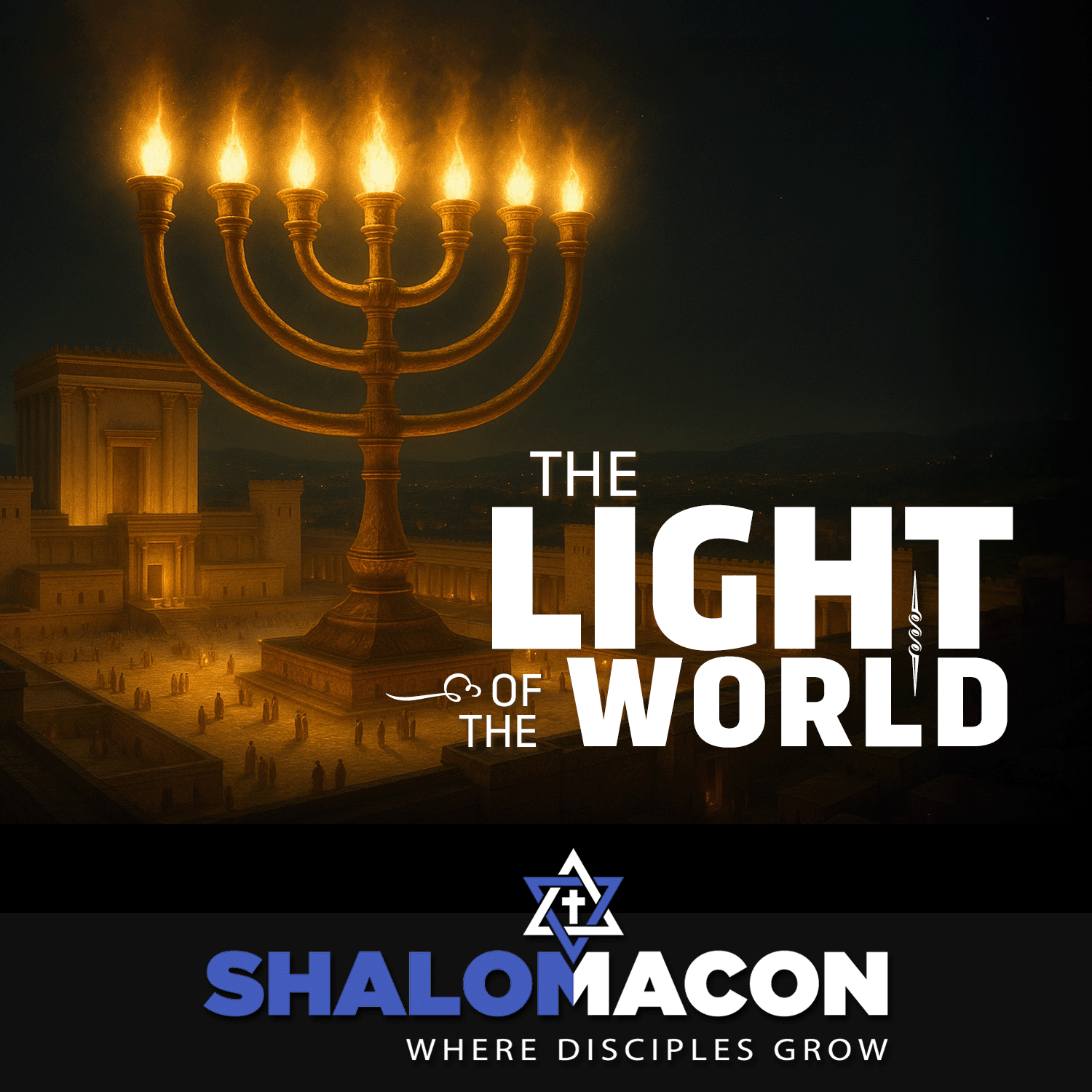
And the world sort of, you know, you can feel it during the wintertime and the getting dark. Everyone, they kind of want to be inward. You want to go home. You want to be warm. You want to just cuddle in there inside. And that is the exact time and season, literal and metaphorical, when Hanukkah shows up and we celebrate the festival of light, or lights. It's not a festival about darkness. It's not a commemoration of how bad things were and how we had to do this. It's a festival of light. So I want to talk about light, about candles, of all things, about miracles, about hope, and about what happens when we refuse to let darkness have the final word.
Everyone knows about Hanukkah, right? Has anyone in the room ever not celebrated or heard of Hanukkah?
Okay, good. There's a story behind it, you know. Everyone knows this story. Small band of these faithful Jewish guys defeated the mighty Greek Empire. They had one day of oil. It burned for eight. There was a military victory. There was a miracle of supply. But what we miss is why did Judaism after that continue to thrive and survive when Greek civilization, for all of its philosophy and architecture and art and glory, ultimately it just crumbled into dust?
The Greek Empire. The Greeks gave us a lot, didn't they, PETA?
Just kidding. Plato, Aristotle, the Parthenon, democracy, the Greek Empire. Alexander achieved greatness on a scale that was just unbelievable. And yet that light went out.
Their culture fragmented. The empire collapsed. Meanwhile, this tiny little people in this tiny little land, constantly having been conquered and scattered and exiled and persecuted, not only survived, but we took the light and are still carrying it through millennia.
The ideas we celebrate on Hanukkah are still alive. They're still burning. We still pass that from generation to generation. So what's the difference?
Well, I will tell you what. Antiochus Epiphanes, or Antiochus knew Epiphanes.
There's a lot of different ways to say these things in Greek.
He didn't just want to defeat the Jews militarily. He wanted to extinguish Jewish practice.
He desecrated the temple. Yes, but much more than that. He's actually trying to stamp out what was occurring in Jewish hearts and homes.
That was a bigger thing. The rituals, the prayers, the celebrations, the candles, Shabbat, peaceful, ordinary things that made Jewish households a very special place where light lived.
Because he knew, Antiochus, that the real power of Judaism wasn't in its armies.
It was in the commitment that took place within the family within the home, within Judaism. And so the Greeks, we went to Athens a few years ago.
The monuments, they're awe inspiring, even after all these years. But you know, when the empires fell, there was nothing left to hold the pieces together.
There was no daily practice, no light passing from parent to children. There was public grandeur and all this spectacular architecture and all that stuff. But Judaism survived because we built something very different, something much quieter, something that happened for many of you, I hope, around your dinner tables last night, when we have Shabbat dinners and bedsides, saying the Shema and blessing your children and lighting candles and all these things. And we created light in our homes, light in our homes that we could not allow to be put out.
And here's how important this illustration of candles can make this point. There's an interesting law from the Rambam who teaches something about Hanukkah candles or the menorah, the Hanukkiah. He says that the commandment is so precious that if you have no money to buy your candles for your Hanukkiah, you should sell something or borrow the money to make sure that you can do that, to fulfill that. It's so important.
But then the law presents a dilemma.
Because it's Friday afternoon, you have exactly one candle and it's also Hanukkah.
The question do you light it for Shabbat or for Hanukkah?
Logic says Hanukkah.
Hanukkah, it's a.
We're told to sell or borrow to complete this mitzvah.
There's nothing comparable about the Shabbat candles.
Hanukkah, this incredible military victory, the salvation of the Jewish people, the miracles of God, the restoration of the temple. Surely. And it only comes around once a year, surely this takes precedent. But no, of course not. You knew Shabbat, the one light is for Shabbat. Why?
Because Shabbat symbolizes Shalom Bayt.
Not B I T E B A Y I T. Shalom Bayt. Shabbat symbolizes peace in the home.
It takes priority. Hanukkah, it's all those things, great military victories, the Maccabees, courage, faith, triumph of the few, the victory that held it all together.
But that's so Greek heroes and monuments and battles and wars and the world out there that we conquered.
That's not Judaism.
If you have only one candle, light it for peace, to be in your home, for peace.
The light of war versus peace.
Peace wins.
That's a Jewish expression and it's a contributor to why Judaism has survived. Why Judaism is attractive. Why Greek civilization and all of that didn't. We were not better warriors, really.
We just weren't. We didn't build bigger temples or write. You know, you could argue about philosophy, but, man, I love some of the Western philosophy.
We have our great ideas, but we survive as the Jewish people and the Jewish idea because we value the home more than battlefields. Marriage is more important than military grandeur, and children are more important than generals. And quiet light is this domestic peace better than the blazing battlefields. And that's what Antiochus wanted to destroy.
It wasn't just the temple, not just religious freedom in something abstract. It was very, very targeted to keep Jews from being Jews.
But that has not gone out. That light was not extinguished. And here's. It gets a little challenging because we can say, that's beautiful.
That's, you know, the home inside the four walls, the family, even welcoming guests. And the beauty of that. And that would be easy. That's the easy place to be to say, we have the.
Kept it burning in homes and we've preserved it through persecution and exile, and it's been passed, mission accomplished.
Let's lay low, let's keep safe, let's protect, let's make sure nothing threatens anything we've built. And that is the temptation of insularity.
And there are many, many Jewish communities which are insular.
They are closed off. That's a temptation, especially when the world feels very, very hostile outside.
Let's just contain it. Let's focus inward. But if we choose to hoard the light, we miss the entire point, because light by nature is not. You can't contain light. Light, you shouldn't contain light. It's not designed. A flame locked in a box is not really fulfilling its purpose. It's just snuffing out and suffocating.
That's hidden light. And hidden light doesn't do that much. We need both.
We need the internal light and we need the out light. And the light begins in the home. That's what we're talking about, foundations, peace in the home, Shabbat table, shalom, bite. Blessing your children, your wives, your husbands. That's the bedroom.
If you don't have that, if you don't have that, then forget about selling candles. Dedicate everything you have to getting that in your home. That's where it starts. That's the foundation. But the light must move beyond. It must reach, it must spread. It's gotta illuminate out there you are the light of the world. Have you ever heard that no one lights a Lamp and puts it under a basket.
That is absurd. You put it on a stand where it can shine and illuminate and guide. And this is a question. The Talmud actually wrestles with this idea.
Can we take one candle on the hanukkiah and light another candle with it?
Now you say, well, of course there's a shamash. There's a servant candle that does this.
I don't know where that hanukiah went. But you know what they look like. Can you. Suppose you don't have the helper candle, you don't have the lead candle.
Can you take another candle and light another one with it?
Can you?
No.
Rav, one of the influential voices says, no.
Simple reasoning.
The phrase is kamichash ka mahish mitzvah. You're going to diminish the first candle if you do that.
It needs to shine in all of its glory. You'll spill some wax or you'll lose some oil. And so the first light becomes less. And there's logic in that perspective.
Someone says, we see that with people's inner light, they are insular. I don't want to get involved with people who are different than me, who are beneath me, who are not as holy as me. I don't want them to rub off on me. I'm not going to.
We can say it in a holy way and say, I'm not going to cast my pearls before swine.
Jesus didn't exactly mean it that way. But if I get in there, if I share things, my standards will fail. My light will be diminished. I need to protect what's precious. But then Shmuel is the other opinion, Rav, Shmuel. In the Talmud, he says, of course you can do that.
And the law follows Shmuemuel. So you were right.
You were right because the law follows Shmuel. Why? Because when you use the flame of faith to light someone else's candle, you're not diminished. That light grows inside of you, and it grows inside of them. Now there is more light in the world, not less, because your little candle was diminished. And when it comes to spiritual goods as opposed to material things, the more you share, the more you have.
You share knowledge, you don't lose the knowledge, you impart it. You share your faith. It doesn't weaken stronger. You share your love. There's not less, there's more. One candle raises up, it results now in two full burning flames because you passed on your light.
Your light, as imperfect as it may be flickering, has the power to kindle others without losing Anything.
Menachem Mendel Schneerson, the Rebbe of Chabad.
He built an entire philosophy of Jewish life around this principle. And he said it very, very clearly. When you light someone else's candle, you are not diminished. The world becomes brighter because there are two shiners.
And then he would add this extra thing. A small light dispels a great darkness. You can walk into a black room, strike a match, and what happens? A little tiny match. You strike it and the whole place is illuminated. Depends on the size of the room, obviously. Don't go that far with me.
Tiny flame. It's like the size of your fingernail.
It is. It exists and the darkness retreats. And that's the same thing we do when we impart light into darkness.
Small acts of goodness, small words of encouragement, small acts of compassion. In a world that is very, very cynical and filled with you, ready, rage, bait.
We shine and one spark is enough.
How can you not share it? You are obligated.
Not because it's some, like, checking off lists. Light is generous. Light spreads and shares and illuminates. That's why the Rebbe and Jewish law talks about, when you light your menorah, don't do it on your kitchen counter where it's only inside your house and you can see it. Where do you put your menorah?
In the window.
And you say, well, so it's like everybody's Christmas tree that they put in their window. It's a little bit different than that.
You put it in your window at the doorway in the window facing the street. It's public, it's private, it's increasing light.
You are the light of the world. Who said it?
You can say it. It's a messianic synagogue. You can say it out loud.
You are the light of the world.
A city set on a hill cannot be hidden. Nor do people light a lamp and put it under a basket, but on a stand. And it gives light to all the.
Let your light shine before others so that they may see your good deeds and glorify your Father in heaven. It's not. You know what you ought to think about becoming the light.
Not. You might, if you do it right, one day be the light.
You are the light.
Jew, gentile, it doesn't matter. Called into this beautiful identity, present tense. The light is in you right now. What is that light? The image of God.
I love it.
I love it.
Don't hide that. Don't keep it locked in your house. No matter what's going on out there in the world.
I hope that when people see your light, your kindness, your integrity, your compassion, they'll recognize the source and actually have that happen where they get a glimpse of God through you. That's a powerful calling. Yes, it is. I love it.
So we are here this season particularly.
I guess I don't. Maybe I shouldn't fall into the trap. But, you know, it's been a weird time.
I think we can all agree on that, really. For the last five or six years, it's just been really weird.
And sometimes it does really feel dark in December, you know, we're coming into these literal and figurative darkness, and Hanukkah's there, and it comes in and we're lighting these flames and another and all this. But there are beautiful miracles of eight days and oil and Krispy Kreme dough. Oh, no, that's something else. And all these great things that surround it. But the real beautiful, beautiful, beautiful component is the light that persists, that will not be extinguished.
There's a third miracle that a lot of people don't know about.
Centuries after the Maccabees, when the Romans had destroyed the second temple, there was a debate about whether or not Hanukkah should even continue.
Right? Logically, there's no temple. We've lost the temple again.
Why would we celebrate Hanukkah?
And there were at least one community in Israel where they didn't do that. They stopped observing it.
But we're gonna light our hanakiyot tomorrow, tonight and tomorrow and the next day, because it survived without the temple, without any of that. And they haven't rebuilt the temple. But we still have the story, and most importantly, we still have the light.
Odlo avda tikvatenu. That's something that came into Hatikva later.
Our hope is not destroyed.
And dark times, I know they tempt us to retreat as we talked about. And I do hear that. I hear it from people older than me.
I hear it from people younger than me.
But when you carry the light, despair should not be a choice you make.
You don't have to be. You don't have to be falsely optimistic or Pollyanna. But as a light bearer, we don't buy into that stuff.
We celebrate Hanukkah. It's nice, it's fun. Especially when you have 80s crazy nights in parachute pants and membership members Only jackets. It's fun, it's beautiful, but it's so much more. You present tense, are the light of the world at the festival of Light. And your home with its Shabbat Candles and its peace and its love. It's a beautiful foundation. Without, you're not. You're sort of inauthentic. You don't have as much to share.
But that world out there. So we're going to light our menorah, our tanichia, we're going to put it in the window. We're going to spill that light out.
We're going to remember that the Greeks had their glory and it faded away, that empires rise and fall and crumble. But light persists and we are celebrating it. And the Jewish people kept that hope alive.
And now you, whether you were born into the Jewish part of the story or grafted into it, we're all part of that miracle. And that's something beautiful that we celebrate together. So when someone asks you, why do you do that?
Why do you celebrate Hanukkah if you're not Jewish?
I hope that your eyes will light up.
I hope you will tell them about the light within and the light without, about peace in the home, about peace outside the home. Because light lights others. And I hope that's what you'll do because you are the light of the world. You realize that's how he opened the Sermon on the Mount. There was the Beatitudes. And then he went right into the thing about saltless salt.
And you are the light of the world. Like, it's a key thing. He wants you to get it, and so do I.
And it comes with a command.
You are the light of the world.
Let that light shine before all humankind that they may see your good deeds and bring glory to our Father in heaven.
Happy Hanukkah. Shabbat Shalom.
[00:25:24] Speaker B: I'm Darren with Shalom Macon. If you enjoyed this teaching, I want to ask you to take the next step. Start by making sure you subscribe to our channel. Next, make sure you hit the like button on this video so that others know it's worth their time to watch.
Last, head over to our website to learn more about Shalom Macon, explore other teachings and events, and if you're so inclined, contribute to the work that we're doing to further the kingdom. Thanks for watching and connecting with Shalom. Making.