Episode Transcript
[00:00:05] I just realized in looking at the date that this isn't actually the first week of January. That shows you how out of touch I am with the actual calendar. But nevertheless, it's still the first half of January, which means that we get to talk about your amazingly big plans for the year. That's what I was alluding to. Anyone have any.
[00:00:28] Did you have. I know we have Rosh Hashanah. Don't do that.
[00:00:32] Don't say no. I made them all in September. There's still a thing where, when you come to this turn of the year, although I'm going to talk about that in a couple of weeks, there's still a thing where we have this sort of sense of renewal. So did anyone make any New Year's acknowledgments, any resolutions?
[00:00:54] Good. I see at least a couple, and I know at least one person has, because I had a conversation with that person this week, and it actually reminded me in many ways of why I do what I do. Someone came to me and they said, rabbi, I'm making changes this year, real changes. I'm committing this particular aspect of my physical health to God, and I'm going to.
[00:01:19] I'm committed to this.
[00:01:21] That always resonates with me. Because when I made that decision about 13 years ago to take my physical health more seriously, it was really one of the most important decisions that I ever made. Not just physically, but mentally, spiritually, Discipline. So many other aspects of my life changed. So when someone tells me that they're considering this, it's. I get it. I honor it, and I want to see them succeed.
[00:01:49] Excuse me. Here's what I also know, is that the vast majority of people, no matter what it is, physical or not, the vast majority of people who commit to something fail.
[00:02:04] They make resolutions and they fail. Not because they're weak or not because they lack the desire that. Certainly not because they don't understand the process they're about to enter.
[00:02:15] No, that is the problem, actually.
[00:02:18] It is the problem. You're not weak. You're not a failure. You're not doomed for destruction. But you don't understand the process that you're about to enter. You don't understand what's coming. And when it arrives, many people bail. They think that something's wrong with them instead of recognizing that it's just really a part, not just of New Year's resolutions. That was just the introduction.
[00:02:44] This is a part of life.
[00:02:47] So I want to show you something today that's going to help you understand what you're up against in life, doing great things in life, whether it is your physical health, your spiritual growth, building a business, becoming a better parent, or walking as a disciple of Yeshua. Because this all matters. The hard things make us who we want to be.
[00:03:18] This is just the way it is.
[00:03:20] Now there's a model I came across.
[00:03:23] I have a coach that helps me in so many ways to move my progress needle and manage all of the different things that I do in my schedule and tasks and all kinds of things.
[00:03:38] But he's a part of a program that's called Commit Action, which I love the name. But in that process I was introduced to a curve which I want to share with you today.
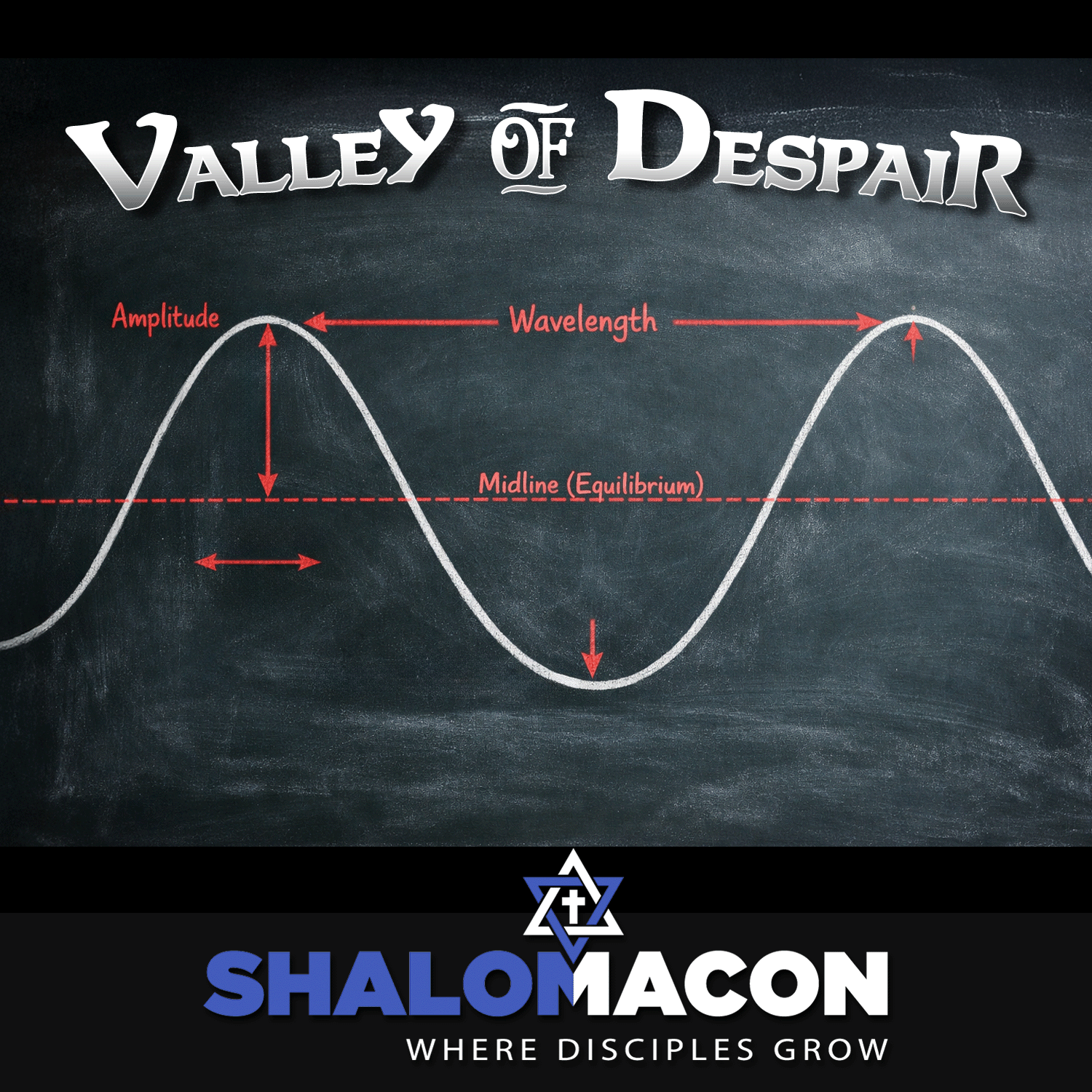
[00:03:52] And I hope you guys have that curve from email because it's like the key to the entire message.
[00:04:06] I don't have anything to say about.
[00:04:12] No, I'm sorry guys, I didn't mention it. It should be in the Shalom Macon Gmail. Perfect.
[00:04:21] This is actually a curve that's based on research that was done in the 70s by some psychologist trying to understand how people respond emotionally to change. It was originally for business and organizational development. But when I saw it, I realized that in so many ways this is the, this is the human experience.
[00:04:45] This is what happens when we try to do hard things. If there's any way you guys can enlarge that at all, that would be awesome. But it's okay. If not, I'll go through them.
[00:04:54] This is what happens when we try to do hard things.
[00:05:02] And in many ways it is also the disciples journey. So I want to walk you through this real quick.
[00:05:08] Number one, the great, incredible beginning of the year. Phase one is called uninformed optimism.
[00:05:19] Uninformed optimism. This is where we all start. We've got the idea, the plan, the vision. Oh man, it's gonna be incredible. This is it. This is the year. This, this is a decision that changes everything.
[00:05:35] You can see it, you can feel it, man. The future version of yourself is right there. It's so clear. You're already living it emotionally. It's the new gym membership, the new business launch, the new commitment to daily prayer, the new romanticizing your wife on a regular basis. Plan all these things, whatever it is, you, you're on fire with possibility.
[00:06:02] Here's what you have none of in this phase.
[00:06:08] Information you don't know about the 5:30 alarm when your body's screaming to stay in bed. You don't know about awkward conversations that you're going to have to have to repair. Relationships you don't know about the moments when you're going to feel completely incompetent at doing something that you thought would be so easy and so natural. Uninformed optimism. It's a beautiful place, enjoy it, but do not build your house there. You're moving.
[00:06:44] The next phase, informed pessimism, now you're in it and something's happening. You're getting information, you're gathering real information and that information is telling you this, wow, this is harder than I thought it was going to be.
[00:07:03] This is taking longer than I expected. This does not come as naturally as I wanted it to.
[00:07:08] Informed pessimism, that's when reality shows up to the party. The work is real. There's resistance both internally and externally. That also is real. And the gap between where you are and where you said you wanted to be is ever growing.
[00:07:26] Many people, when they hit this phase, start looking for the exits.
[00:07:31] Phase two, they start looking for the exits.
[00:07:38] They start creating the narrative that says, oh, well, maybe this might not be the right time.
[00:07:45] I'm just not built for this. And sometimes that's true. There are things that we set out to do that we realize we need to pivot away from those things. It's actually, it's not going to be right. But far more often, far more often, what's actually happening is that you're learning that significant change requires significant effort.
[00:08:08] And that's not a flaw in the plan. That is how growth works. But here's where it gets really interesting. Because if you keep going, if you push through informed pessimism, you're about to enter the most important and valuable place. Place. The title of the message to uplift you. For the first of my messages in 2026, you enter the valley of despair.
[00:08:37] Because this is where everything you need to understand lives.
[00:08:41] This is the place where the work is very, very, very hard and your motivation has completely collapsed.
[00:08:52] Where the voice in your head is relentless. And here's what you need to understand about the Voice. For you super spiritual types, it's not a demon, it's not the devil, it's not some outside force malevolently trying to stop you from progress. Nine times out of ten, it is your voice, your own fear, your own limitation, your self protection mechanism that's saying, everyone else can do this, why can't I? I thought I was better than this. That worked for them, but why not for me? Maybe I'm just not built this way. And you know what the Voice is doing? The voice is giving you an exit ramp. That feels so justified, It's A well trained voice in the human frame. It's not that you're quitting. Oh, no.
[00:09:47] It's what I was sensing in informed pessimism. I made the wrong choice.
[00:09:51] This is. I picked the wrong plan. I need a different approach. And here's what most people do in the Valley of Despair. They leave. They definitely exit. They take the exit ramp. They don't admit defeat. That would be. No, I'm not a quitter.
[00:10:07] They come up with a new plan.
[00:10:10] There's a. Oh, no, there's a better way. They make a new commitment, a new approach, because that gives them. What are they getting?
[00:10:21] They're getting a new hit of uninformed optimism.
[00:10:26] Smoking the pipe of uninformed optimism. And it's just as bad as a doe pit.
[00:10:35] It's a lie.
[00:10:41] The kids tell me you're not supposed to use the word dope today. That that's not what it's called. That is. But I hope you know what that means.
[00:10:49] This is a cycle.
[00:10:52] This is a cycle that keeps people stuck from where they're trying to leave for decades, over and over. And I'll tell you what the Valley feels like, because when you're in it, you need to recognize it. It is the dread before another week of trying.
[00:11:15] It's the shame when you skip a day or you fall down and the voice says, see, you're not serious about this. I knew you couldn't do it. I knew you'd fail.
[00:11:25] It's the exhaustion that sometimes is physical, but sometimes feels emotional. It's laying in bed thinking about the ways I'm failing while everyone else seems to have figured this out. And I'm not just talking about the problem person who talked to me about their physical condition for this year. That's not really just for them. This happens in a lot of ways to a lot of people trying to do a lot of great things that they never will because they're there now. Here's what I've learned from my own life and from watching hundreds, hundreds, thousands I don't know of people try to do hard things.
[00:12:04] You cannot avoid the Valley of Despair. In anything that is worth doing, you cannot avoid it.
[00:12:18] It's not optional. Why? Because it's structural.
[00:12:23] If you're trying to build something that doesn't exist yet, if you're trying to become someone you're not yet, if you're trying to develop a capacity you don't currently have, you will enter that valley. And the question is not, well, what will I, you know, will I have to face it in the thing I want to do. Is he really talking to me? I think I can get out of it. No, you will. And the question is, how will you face it when you get there?
[00:12:50] That's the question. The valley of despair, as I said, this is where the work happens. It's where the character is formed. It's where the commitment is made. It's where you figure things out. It's where the fantasy version of uninformed optimism collides with the reality of what you're really trying to do. And if you press and press and press, you start the incline and something new emerges.
[00:13:15] The personal fitness thing is just so easy to use.
[00:13:19] But hey, Paul did it a lot.
[00:13:22] Paul talked about shadowboxing and running the race and all kinds of things. People like his work.
[00:13:28] I'm going to go with that.
[00:13:31] When I made a decision as a fat 40 year old that said, I don't want to be like this. I want to live a long time, I shouldn't say that word. I'm sorry, that was inappropriate. As an overweight person, I had struggled with weight from my 20s to my 40s. I made it to my early 40s. I made a decision. I said, I'm overweight. I don't want to be like that. That, please forgive me for anyone that I offended with that word. That was inappropriate.
[00:14:04] That's what I was telling myself. And it was some kind of weird like punishment language I was using for myself.
[00:14:13] But I hated that.
[00:14:19] I hated it.
[00:14:21] Five alarm, 5am Alarms.
[00:14:27] I would just say, I don't, I can just skip this. No one will know.
[00:14:33] And that was not the devil talking.
[00:14:36] That was me trying to protect myself from discomfort. And in the learning, you learn something crucial.
[00:14:43] What you can do in the Valley is not avoid it. You can't skip it. You just learn how to move through it more quickly.
[00:14:53] That you can do. And first, how do you do that? First thing you do is you expect it. You know it's coming. If you have a serious thing that you want to do, you know it's coming. You expect it. When you know it's there, it's part of the process. It's not evidence of failure. Then it loses half of its power, at least. Surprise, surprise makes the despair feel even heavier.
[00:15:20] Anticipation allows you to be ready for it. Second, when you're in it, you need to name it, you need to recognize it. And when those thoughts come and say, maybe I'm not built for this, you say, this is the valley.
[00:15:32] This is the Valley. This is not like the verdict of me and who I'm becoming. This is the Valley. I'm in the Valley. I'm in the Valley. And language saying it restores in some weird psychological way the agency to say, I knew this was coming, I'm here, I'm ready it for.
[00:15:50] And third, you stop asking questions about, will this work?
[00:15:56] Can I do this? Am I the kind of person who succeeds at hard things that I really hear? Did I really hear? Those are the Valley questions that are intended to send you back up. Looking for more uninformed optimism?
[00:16:10] Start asking, what's the next right action? What's the next thing? One thing I can do. You don't have to solve the whole problem. You don't get to the end. You don't do that. You just have to take the next step. Carl Jung, the amazing. Like the renowned psychiatrist, he once advised a patient who had been through personal crises after crisis after crisis. He was despairing his existence in the world. Carl Jung's counsel was quietly do the next and most necessary thing.
[00:16:49] Not the big thing, not the whole thing, the next thing. That's how you move. And fourth, this is kind of important. If you're down there and you can't get out and you know you want to just quit, then you reach out to someone. The Valley wants you to be down there alone so that the voice can talk to you and tell you all these things. Text somebody, call somebody, say, hey, I'm struggling.
[00:17:14] People don't like accountability, but that's pretty good. Now, moving through our chart, it's pretty obvious from here what happens, because once you descend, the ascend becomes beautiful. And this informed optimism, you made it there.
[00:17:30] You earned this. You've been through this battle. And informed optimism is when you stop asking yourself, can I do this? And instead, how am I going to do this? What is the next and most necessary step? I'll take that. Then I'll take another one. Then I'll take another one. And you're climbing. You're climbing. So you can feel the view's getting better, the valley's back there. The view's getting better. You're climbing. You're not naive. You're grounded. And then, of course, we arrive.
[00:18:04] Arrive.
[00:18:05] Do we ever really arrive at the best version of ourselves? No, we don't. But success and fulfillment, the change.
[00:18:13] You did it, man.
[00:18:15] You did it.
[00:18:16] You integrated something new and beautiful into your life. You did this thing, and there it is. This is the place where commitment becomes identity.
[00:18:26] But this is the thing.
[00:18:30] There is no such thing as. As A bridge across that valley.
[00:18:38] Everyone wants the bridge.
[00:18:40] Take me from my excitement to success, baby.
[00:18:45] No, it doesn't work. And you know why?
[00:18:49] Because at each of those points here, informed pessimism, valley of despair, informed optimism. You know what you're doing there? You're building pillars.
[00:19:00] You're building pillars. You're building the foundation of what one day will be a bridge. But do you know what that bridge is used for?
[00:19:09] That bridge is for you to walk back from the successful version of you to someone else who is over at the naive, uninformed optimism stage and say, let me tell you something, you can do it, but there's no bridge paths. This is only for me. You gotta go down here and I'll meet you on the other side. And. And you twinkle toe across your success bridge, and you wait for them. And you be one of those voices that they call when they're struggling in the valley of despair. That's what you're building.
[00:19:41] Do you understand?
[00:19:43] Feel like you're at a Tony Robbins seminar? I hope so.
[00:19:49] Once you've made the journey, they will walk the curve, but you can help them. Now, seriously though, why are we talking about this? New Year's? Whatever, okay?
[00:20:04] This is a disciple's journey in so many ways as well.
[00:20:11] My job, and I came to this very clearly as I was planning 26. My job is to be the best version of myself so that I can help as many other people become the same.
[00:20:24] That's my job.
[00:20:27] That covers a lot of territory. That's your behavior, your biblical interpretation. Repairing the world as souls on a mission, your soul journey, your physical health, your ascension through the levels in your time on this planet, all of that. But that curve, that curve.
[00:20:45] So many people.
[00:20:47] And you may know them, you may have been one who were told, say the prayer.
[00:20:54] Jesus can save you from burning in hell forever. Say the prayer. It's done, it's over.
[00:20:59] It's a wonderful party. From this point forward, your life will be majestic.
[00:21:06] And you say the prayer.
[00:21:09] What do you have?
[00:21:12] I don't want to say uninformed optimism, because there's a reason for optimism. But. But in life, what do you have? You have an unrealistic picture of what's ahead. Why? How do I know that? Because Yeshua said it.
[00:21:31] I didn't make it up. Yeshua said it. In this life, you will enter the valley of despair. He didn't actually say that. He said you will have trouble.
[00:21:43] Life, struggle, disappointment. The valley. Wait, I thought, being a believer, I thought that meant everything goes right.
[00:21:53] Well, it does.
[00:21:55] If you believe that God is working you to become the best version of yourself, this is part of the process. That is what I call going. Right. But it's hard. Now, we bring in a lot of other difficulties into that that we're not talking about here with abuse and disease and different things. But even you think about Joseph, you look at his life. Joseph's life was a sine wave. Wasn't really, was up, down, up, down. He spent time down there. He spent a lot of time down there in the valley of despair.
[00:22:36] And this is how we move through the valley as disciples.
[00:22:42] You keep showing up.
[00:22:44] You keep showing up. You pray, you serve, you maintain your character when no one's watching. You do acts of loving kindness even when you don't feel like it. Every dissent is for the sake of a future ascent, right? You know that that's the Hasidic axiom that I've quoted 500 times in my career. But guess what? I finally found the visual representation of it.
[00:23:08] This is it.
[00:23:10] Every descent is for the sake of a future ascent. That's it.
[00:23:16] When worlds collide.
[00:23:21] David knew the valley, right? Very, very, very, very, very famous psalm.
[00:23:28] In this world, you will have trouble. Yeshua said, but David said, yea, though I walk through the valley of the shadow of death, I will fear no evil.
[00:23:35] Okay, did you catch it, though? Not around, not over. When I build a bridge over the valley of the shadow of the valley, whatever. No, when I walk through it, Yeshua also said, take heart. I have overcome the world. The valley is real. The valley is not the end, and you're not alone in it. So what makes your valley different? Well, a lot of things.
[00:24:04] But you have resources in the valley as a disciple that other people don't have. I told you about practical things, but you have prayer, you have community, you have scripture as an inspiration. Every year, including this year when I read through the Torah, I continue to find new ways that God is communicating to us about people and who we are. The Torah never stops teaching, and you have access to that.
[00:24:31] You, as a Messianic disciple, have access to that in ways that so many people do not. Because the Torah is relegated to some Sunday school stories for you. It's real, it's practical. We learn from Joseph, we learn from Isaac, from Jacob, from Moses. We learn.
[00:24:48] And you have that.
[00:24:52] And that's a beautiful difference.
[00:24:55] So here's the bring home.
[00:24:58] Here's understanding what this curve will give you.
[00:25:02] This curve helps you get in touch with an emotional state of being that can carry you through Anything. And that state, which I shared with the young people at Saudi advance last week, is happiness.
[00:25:19] We just want to be happy.
[00:25:24] It's not happiness.
[00:25:26] Happiness is fleeting. Happiness comes and goes. It really does. You have massive ups. You have major downs.
[00:25:34] Contentment.
[00:25:36] Contentment. This is what the valley can bring us. The settled ability to live at peace with what is without surrendering the responsibility to keep growing into what can be. This is contentment. It's not settling. It's not giving up. It's an inner steadiness that is not dependent on circumstances or people or anything like that. Gratitude.
[00:26:06] You can look at your life with the difficulties and all its beauty and say, I'm at peace with the process. I'm content. I'm part of it. I understand. I recognize it.
[00:26:18] For many of us, that image represents many times in our lives. And there are more of these because your life, too, will look like a sine wave. Is this geometry or trigonometry? I can't remember. I flunked them both.
[00:26:34] I didn't really. I didn't. Mom.
[00:26:37] I didn't.
[00:26:40] It's a sine wave. And that's what our lives look like. And that's a little section that I hope will stay forever in your mind when we face. Because we know.
[00:26:52] Oh, rats.
[00:26:53] We know that the valley is a place where God can form us. We know this.
[00:27:07] And I want to be formed. Do you?
[00:27:12] We're formed in God's image, but that doesn't mean that he's done with us.
[00:27:21] So you can't avoid it in anything useful or worth doing.
[00:27:27] You recognize it. You learn to move through it quickly. Name it, reduce the questions, reach out.
[00:27:33] These are disciplines of discipleship. And on the other side is not just success, it's fulfillment, it's integration. It's contentment.
[00:27:41] Contentment, A version of yourself that you couldn't even have imagined from. Actually, you will be so much better than what you thought you would be. From the uninformed optimism place, you will.
[00:27:59] So I want you to do this. I want you to identify where you are on the curve with the one thing that matters most to you right now. That is hard. One thing. Are you in uninformed optimism? Are you in informed pessimism? Maybe you're in the valley of despair.
[00:28:17] Maybe you're trying to figure that out. But this, now, today, with this, it can stop becoming a crisis and you can just do the. Quietly do the next and most necessary thing. And when you're in that valley, what I want you to recognize is that, thank God, you've moved through the most.
[00:28:33] You've moved through the fantasy.
[00:28:36] You moved into the place where real stuff happens.
[00:28:42] Every descent is for the sake of a future ascent.
[00:28:49] May we have courage to descend so that we might truly ascend.
[00:28:56] Wisdom. Wisdom to see the process for what God is doing to us so that he can move through us to us is a little. That's a whole other message. But may we discover in the hardest moments of the journey, contentment that will take us through to the ultimate success in the world to come.
[00:29:23] Shabbat Shalom I'm Darren with Shalom Makin. If you enjoyed this teaching, I want to ask you to take the next step. Start by making sure you subscribe to our channel Next. Make sure you hit the like button on this video so that others know it's worth their time to watch.
[00:29:38] Last, head over to our website to learn more about Shalom Macon, explore other teachings and events, and if you're so inclined, contribute to the work that we're doing to further the kingdom. Thanks for watching and connecting with Shalom Macon.