Episode Transcript
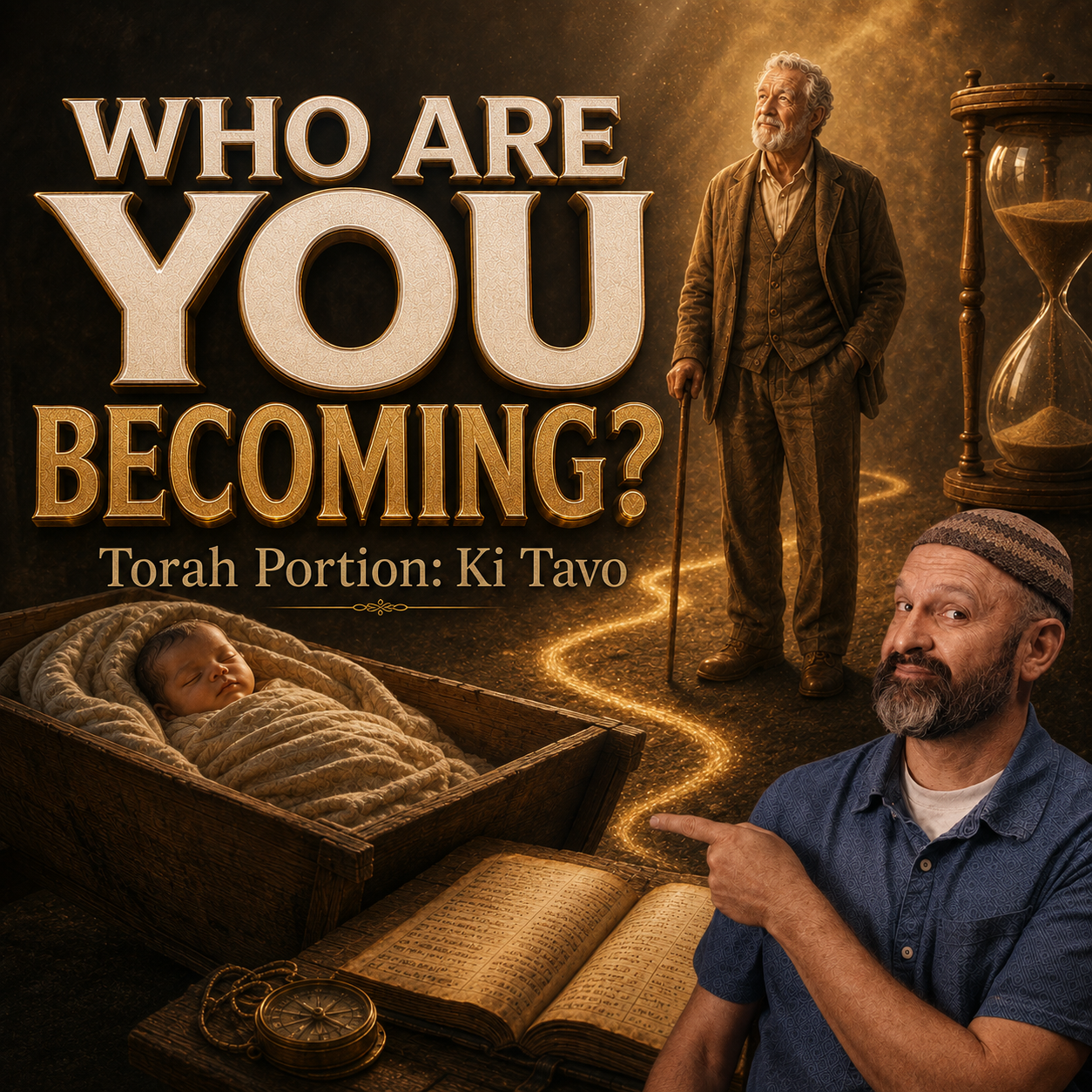
[00:00:00] Imagine that somewhere there is a record of your life, not merely the things you accomplished, but the choices you made, the time you were given, and the person you became. The first page was written before you were old enough to make a single decision. You entered this world innocent, with your entire future still unwritten. But the final page is different. One day your life will be brought to its conclusion, and the question will not simply be what you accomplished, but how you use the time between those pages. And there's a reason the Torah describes our lives as coming in and going out. But what does that language reveal about the time we spend between those two moments? Let's explore this idea together in this week's five Minute Torah.
[00:00:46] Shalom and Blessings from Shalom Macon, the place where disciples of Yeshua learn, connect and grow. I'm Darren, and before I get into the five minutes of my five Minute Torah commentary, let's cover a few quick facts about this week's Torah portion. This week we are studying the fifth 50th Torah portion and the seventh portion of the Book of Deuteronomy. We are in the portion of Kitavo Deuteronomy 26:1, 29:8 and here are the three things that you need to know about it. 1. First fruits and Gratitude Declaring God's Faithfulness Kitavo begins with the Mitzvah of Bikurim, bringing the first fruits of the harvest to the sanctuary. Each person was to recite a declaration recounting God's deliverance from Egypt and and as gift of the land see Deuteronomy 26, verses 1 through 11. This ritual wasn't just about produce, it was about gratitude. By offering the first, Israel acknowledged that everything they possess came from the hand of God. Gratitude turns ordinary harvest into moments of worship, reminding us to continually recognize God's faithfulness in our lives.
[00:01:51] 2. Gerizim and Ebal Blessings and Curses Moses instructed the children of Israel to take part in an unusual act. Once they crossed the Jordan river, half of the tribes were to go up onto the Mount of Gerizim to bless the people. These included the tribes of Simeon, Levi, Judah, Issachar, Joseph, and Benjamin. The other tribes were to climb Mount Ebal for curses Reuben, Gad, Asher, Zebulun, Dan, and Naphtali. And the Levites were to proclaim to all the men of Israel a set of curses upon anyone who would violate the Torah's ethical prohibitions. Together, all the people were to affirm these statements with Amen. The sharp contrast between the blessings and the curses reveals the weight of Israel's choices. Walking with God leads to life and flourishing turning away brings destruction and despair. Covenant faithfulness is not optional it's the key to blessing and Number three Back to the Future the Prophecies of Moses Moses provides a quick glimpse into the potential future trajectory of the nation. He describes a series of blessings and curses that may come upon them based on either their adherence to or the deviation from God's commandments. The Torah consistently teaches that obedience to God's commandments leads to blessing, while disobedience can lead to negative consequences. Through this, Moses provides Israel with a clear understanding of the direct connection between their actions and the unfolding events in their history. He encourages them to choose wisely, reminding them that their choices will shape the destiny of the nation. This concept of divine reward and punishment is an ethical cornerstone in Jewish thought, promoting accountability, responsibility, and the pursuit of righteousness. There's a difference between being lost and and getting lost. Being lost leaves you searching for direction, but getting lost can mean becoming completely absorbed in something beautiful. So many of us know we need to pray, but we struggle to find the time or maybe create the space to connect consistently with our heavenly Father. That's why I wrote Lost in Prayer, to help you move beyond feeling lost and discover the beauty of a prayer life rooted in in the Jewish sedur. This book will help you understand the prayers, navigate the structure, and see how each part can draw you closer to God. My hope is that prayer will become more than something you're supposed to do, it will become a place you want to be. Be sure to order your copy Lost in Prayer through Amazon or Barnes and Noble using the link below. This week's Torah commentary is called Our Coming in and Our Going out, and comes from my book Five Minute Torah, Volume 1. When the Torah says things in an unusual way, it's usually to teach us an important lesson. Normally, when we think of a person's comings and goings, it's from the perspective of first leaving a place and then returning to it. The Torah, however, has a different frame of reference. Blessed shall you be when you come in, and blessed shall you be when you go out. Deuteronomy 28:6 according to the Torah of person first enters and then departs. Rabbi Yohanan interprets this to mean that our coming in and our going out are the points by which we enter and depart this world. Blessed shalt thou be when thou comest in, and blessed shalt thou be when thou goest out, that thine exit from the world shall be as thine Entry therein. Just as thou enterest it without sin, so mayest thou leave it without this is from the Talmud Bhavametsiya 107A. The point at which man comes into this world is his birth. His going out is his death. The thing we call life is that short span between these two points. We are merely sojourners during this course of our life here in this earth. Rabbi Yohanan connects these two points of entrance and departure with the common theme of blessing. He says that just as a person enters this world without sin, a person is truly blessed if he is also able to leave this world without sin. But how do we do this? Is it even possible?
[00:06:03] Evidently Paul thought it was. His hope was to deliver his disciples into the hands of Yeshua, pure and blameless. And it is my prayer that your love may abound more and more with knowledge and all discernment, so that you may approve what is excellent and so be pure and blameless for the day of Christ, filled with the fruit of righteousness that comes through Jesus Christ to the glory and praise of God. Philippians 1, verses 9 through 11. But in order to present ourselves pure and blameless at the end of our days, we must make every moment count of the time allotted to us in this world. We must work to purge ourselves from the control of our flesh and take upon ourselves the yoke of the kingdom every single day. The good news Yeshua offered was one of repentance and anticipation of the coming kingdom. He taught us that the rest of our lives did not have to be wasted like our previous days, months, or years. Through sincere repentance we could cleanse our past and alter our future, and not only our future, but the future of others as well. Yeshua taught several parables connected to the final account of the soul. Matthew 25 records Yeshua teaching the parable of the ten virgins and the parable of the talents leading up to his teaching the about the final judgment. His point in these teachings is for us to be prepared for the day we would be presented back to our Creator. We are in this world only for a limited time. Rabbi Jacob used to say, this world is like a hallway to the future. Prepare yourself in the hallway that you may enter into the banquet hall. This is from Avote 4 21. We're not promised tomorrow. We must prepare for our departure. We must make every moment count so that we can depart as blameless as when we enter this world. How will you spend today, tomorrow, the days following? How will you use the time that you've been given today to prepare for your departure tomorrow. Will you invest your time into becoming all that you were created for, or will you squander your time here and be ashamed on the day of your reckoning? May your departure from this vestibule be as blessed as your entrance into it. As we consider how to prepare for our final departure, we we should remember that faithfulness is formed through the small choices we make every day. That was the lesson we explored in last week's Torah portion Kitetze, where we asked, what is the least commandment? Yeshua taught that even the least, even the smallest commandments matter, and that those who practice and teach them will be called great in the Kingdom of Heaven. Our lives are not transformed by one grand decision alone, but by a lifetime of daily obedience, repentance, and faithfulness. Each small act is another line written in this story of who we are becoming. If you haven't watched last week's teaching, what is the least commandment? I encourage you to watch it next. It may help you see how the small things we do today prepares for the day when we finally go out from this world. You can check it out right here.